
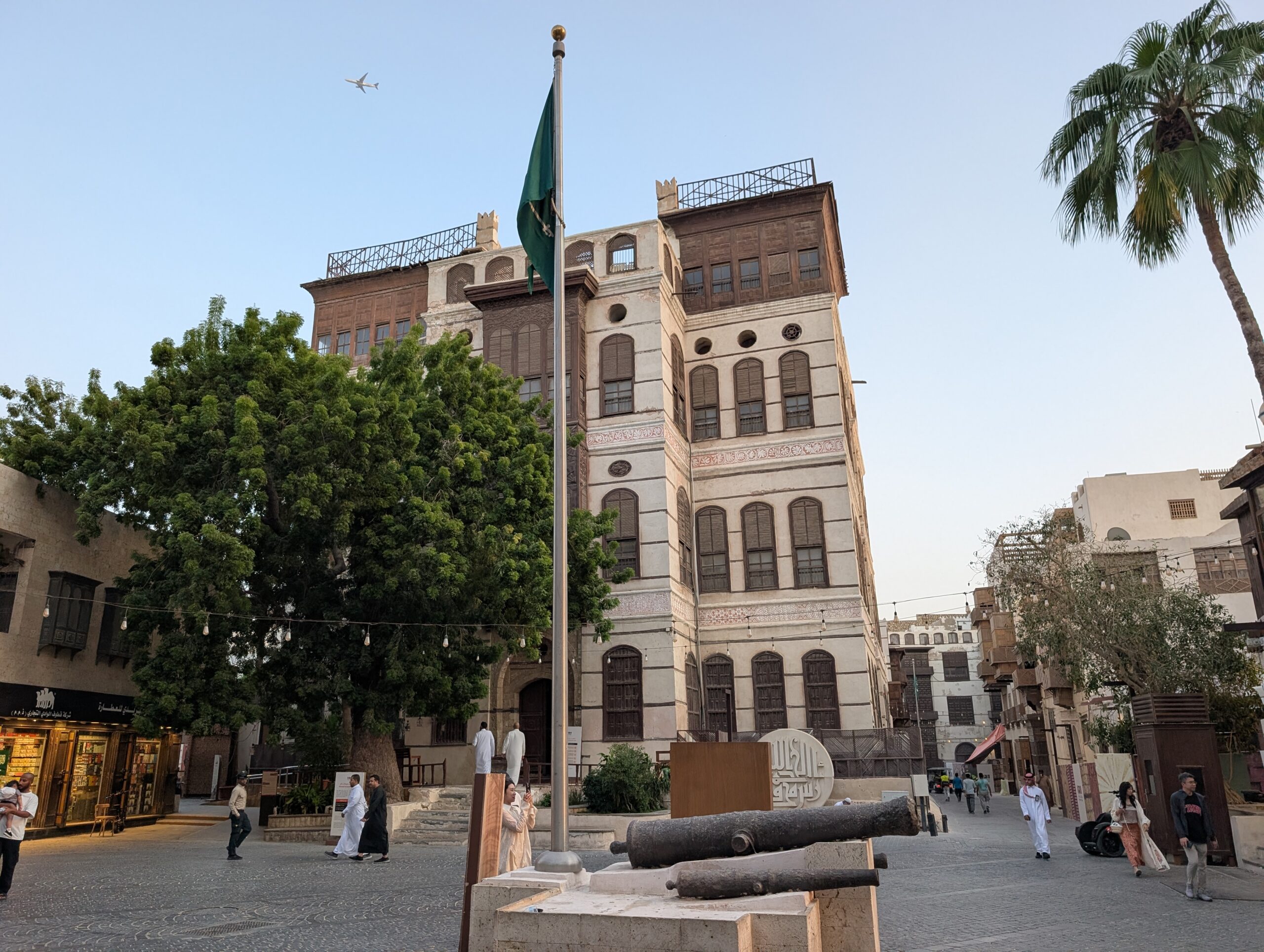
Jeddah has a new cultural landmark. On 6 December 2025 the Red Sea Museum officially opened its doors in the historic Bab Al Bunt building in Historic Jeddah (Al Balad), the city’s UNESCO World Heritage district.
For visitors, artists and curators watching the rapid rise of Saudi Arabia’s cultural infrastructure, this museum is a key new reference point. It links maritime history, pilgrimage routes and contemporary art in one institution that is explicitly designed as a bridge between past and present.
Where is the Red Sea Museum and why Bab Al Bunt matters
The Red Sea Museum is located in Bab Al Bunt, a restored heritage building on the seafront edge of Historic Jeddah / Al Balad, long known as the city’s historic port and first gateway from the sea.
Bab Al Bunt has a layered history:
-
Built in 1866, it began as a small wooden structure and was expanded into a prominent concrete gateway in the 1930s.
-
For decades, its arches were the first sight for many pilgrims arriving by ship on their way to Makkah and Madinah.
-
The building functioned as both customs and medical screening centre, a place where people from across the world passed through before travelling inland.
The structure later became a municipality building and then fell out of use. Around 2004 it was effectively abandoned until Saudi Arabia’s Ministry of Culture and the Museums Commission began a careful restoration as part of the broader regeneration of Historic Jeddah under Vision 2030 and the national Quality of Life programme.
Museum director Eman Zidan describes the project as a revival of both building and story. Bab Al Bunt was restored with original materials such as coral stone and traditional construction methods. The aim was to keep its historic character while turning it into a public museum that once again acts as a gateway, now in a symbolic and cultural sense
What you will see inside: 23 galleries and seven themes
Inside, the Red Sea Museum presents a large scale narrative about the Red Sea world and Jeddah’s role within it.
Key facts that matter for visitors and professionals:
-
More than 1,000 artefacts and artworks
-
23 galleries
-
Seven thematic sections
The themes span:
-
The story of Bab Al Bunt itself and the transformation of Jeddah’s seaport
-
The cultural and ecological importance of the Red Sea
-
Maritime navigation, trade routes and port cities
-
Pilgrimage paths and the movement of people
-
Life in coastal communities and everyday objects from the region
Types of objects in the collection
The museum combines archaeological material, historical documents and contemporary art. Visitors can expect to encounter:
-
Chinese porcelain, incense burners and jewellery that reference historic trade networks
-
Navigational tools such as astrolabes and maps used by sailors crossing the Red Sea
-
Coral pieces and other natural specimens that speak to marine biodiversity
-
Sacred manuscripts and archival photographs that document pilgrimage and daily life on the coast
-
Modern and contemporary artworks by Saudi, regional and international artists that respond to themes of sea, journey and memory
This mix is deliberate. The museum positions itself as a guardian of the Red Sea’s cultural and natural heritage and at the same time as a platform where contemporary artists reinterpret that legacy.
Contemporary art highlights
For readers interested in the art scene, several works have already been highlighted in early coverage and opening tours:
-
Ahmed Mater, “Magnetism II” (2012), a photoengraving that mirrors the movement of pilgrims around the Kaaba using iron filings around a magnetic cube.
-
Manal Al Dowayan, “We Are Coral”, an installation that reflects both the fragility and resilience of the Red Sea’s ecosystems and communities.
-
Reem Al Faisal, “Passengers on Ship” (1994), an analogue photograph from her series The Moment of Arrival, capturing the emotional moment when travellers first glimpse the coast.
These pieces sit alongside the historic anchor from Jeddah’s shores, archival film footage and interactive media that animate the story of the seaport and its connections.
Opening programme and first temporary exhibition
The museum’s opening weekend was staged as a major cultural event under the patronage of Prince Saud bin Mishaal bin Abdulaziz, Deputy Governor of the Makkah Region, and Prince Badr bin Abdullah bin Farhan Al Saud, Minister of Culture and Chairman of the Museums Commission.
Highlights from the launch:
-
An exclusive VIP opening with speeches by cultural leaders and guided tours of the permanent galleries
-
A performance by the Silkroad Ensemble, whose programme drew on musical traditions from across the Red Sea littoral
-
A lively musical parade through the streets of Al Balad, turning the opening into a communal celebration that involved the wider neighbourhood
The first temporary exhibition is titled “Gateway of Gateways” (also referenced as “The Gate of Gates” in some official material). The show is created by Saudi artist Moath Alofi and curated by writer Philippe Cardinal. It examines how Bab Al Bunt has transformed from physical port infrastructure into a symbolic portal that connects histories and geographies. The exhibition runs inside the museum as an inaugural curatorial statement on the building’s evolving meaning.
Alongside gallery displays, the Museums Commission has announced a programme of workshops, lectures and craft based initiatives such as Made in the Red Sea, as well as environmental and music projects linked to the region’s identity.
Why the Red Sea Museum matters for the Middle Eastern art and museum scene
For the wider Middle Eastern art ecosystem, the Red Sea Museum is significant for several reasons:
-
A new institutional anchor in Jeddah
Al Balad has been undergoing a broad restoration campaign, with about 650 historic buildings in different phases of rehabilitation. The Red Sea Museum functions as a flagship project within this strategy and strengthens Jeddah’s positioning as a cultural destination rather than only a commercial or religious hub. -
A model for heritage reuse
The transformation of Bab Al Bunt from abandoned port building to contemporary museum shows how large scale heritage reuse can be executed with high technical standards, from structural work with coral stone to discrete integration of climate control and media systems. This will be closely watched by architects and curators across the region. -
A platform for contemporary art with regional focus
The museum commissions and presents works by leading Saudi and regional artists and places them in dialogue with historic material. For artists and curators this creates new opportunities for research, commissions and exhibition projects centred on the Red Sea as a shared cultural space. -
Alignment with Vision 2030 and cultural tourism
The project is explicitly framed as part of Saudi Vision 2030, which aims to diversify the economy and expand cultural infrastructure. The museum is expected to contribute to cultural tourism in Jeddah and to the wider narrative of the Red Sea as a global crossroads.
For The Art Fair Guy readership this means a few concrete things: if you are mapping the Saudi institutional landscape for future partnerships, residencies or satellite exhibitions, the Red Sea Museum is now one of the central venues to watch in the western region of the Kingdom.
How to plan your visit to the Red Sea Museum
Because the museum has only just opened, visitor information is still being rolled out and may evolve. Here is what is reliably confirmed so far:
-
Opening date
-
Public opening from 6 December 2025 onward
-
-
Location
-
Red Sea Museum, Bab Al Bunt Building, Historic Jeddah (Al Balad), Jeddah, Saudi Arabia
-
-
Content
-
More than 1,000 artefacts and artworks in 23 galleries, organised into seven themes that explore navigation, trade, pilgrimage, ecology and cultural exchange in the Red Sea region
-
For current opening hours and ticket prices, the most reliable sources are:
-
The official Museums Commission channels
-
The upcoming Red Sea Museum section on the Ministry of Culture site
-
Visit Saudi / Visit Jeddah tourism platforms, which are gradually integrating the museum into their listings
Given how central Al Balad already is to most Jeddah itineraries, it will be easy to combine a museum visit with a walk through the historic district, gallery visits and other cultural stops.
FAQ: Red Sea Museum Jeddah
You can adapt this block into schema.org FAQ markup in WordPress for SEO.
Q1: When did the Red Sea Museum in Jeddah open?
The Red Sea Museum opened to the public on 6 December 2025, following an inauguration and preview events in the Historic Jeddah district of Al Balad.
Q2: Where exactly is the Red Sea Museum located?
The museum is housed in the Bab Al Bunt building in Historic Jeddah (Al Balad), a UNESCO World Heritage site on the old seafront of Jeddah.
Q3: What does the Red Sea Museum focus on?
Its core focus is the cultural, historical and natural heritage of the Red Sea. Exhibitions explore pilgrimage, maritime trade, navigation, coastal communities, ecology and the history of Bab Al Bunt, combining historic artefacts and contemporary artworks.
Q4: How large is the museum’s collection on display?
The museum presents more than 1,000 artefacts and artworks across 23 galleries grouped into seven thematic sections.
Q5: Who operates the Red Sea Museum?
The museum is developed and operated by Saudi Arabia’s Museums Commission under the Ministry of Culture, as part of the Vision 2030 cultural strategy and the wider regeneration of Historic Jeddah.
If you are:
-
an artist planning research trips and looking for institutions that engage seriously with regional history
-
a curator or gallery exploring collaboration in Saudi Arabia
-
an art fair or festival organiser who wants to understand how heritage driven venues position themselves within Vision 2030
the Red Sea Museum Jeddah should be on your list.
If you would like tailored advice on how this new institution fits into the wider Middle Eastern art and museum landscape, or how to plan a professional visit, get in touch with The Art Fair Guy and we can help you design the right strategy, from research trips to partnership concepts. Reach out to office@theartfairguy.com