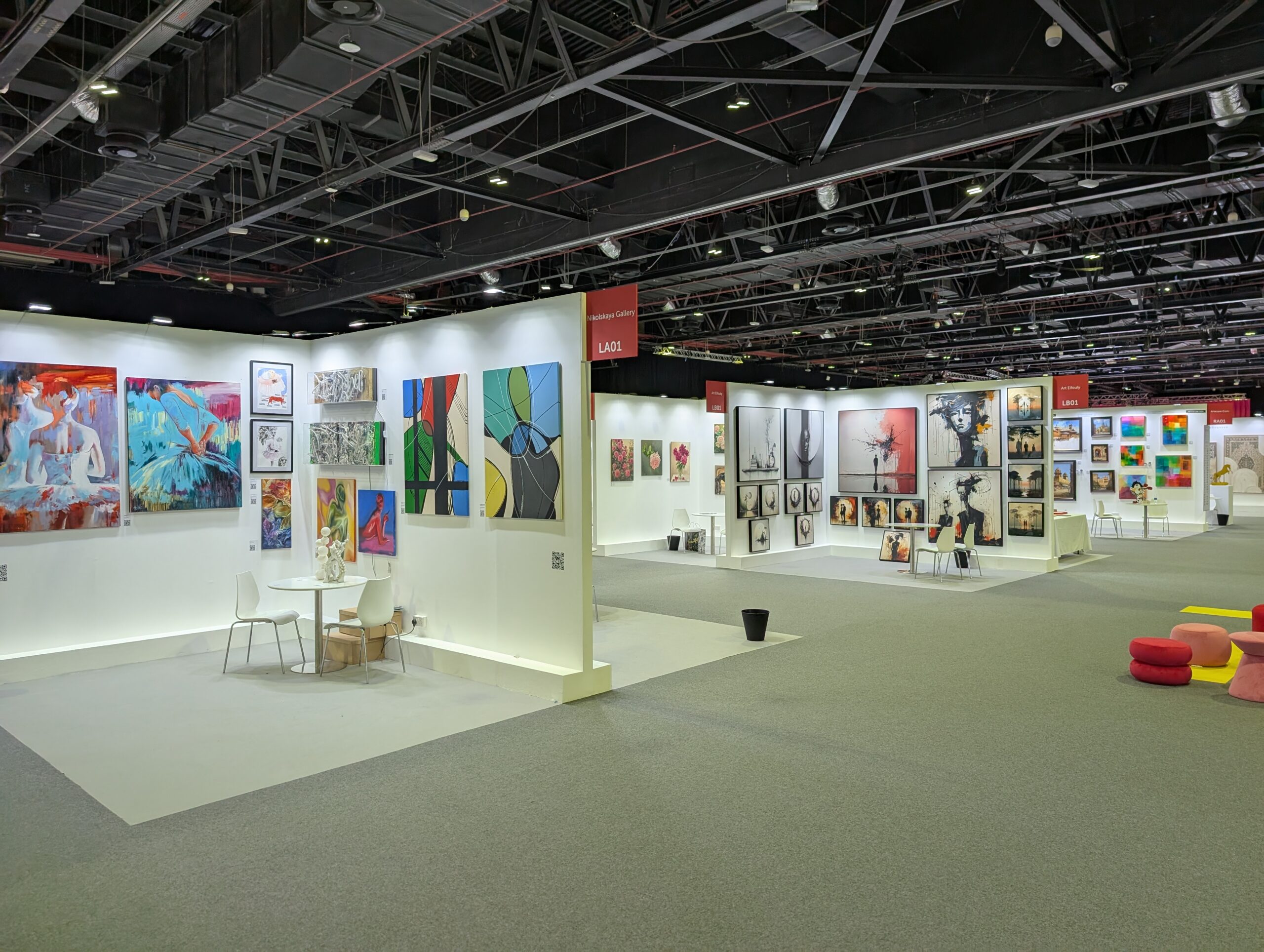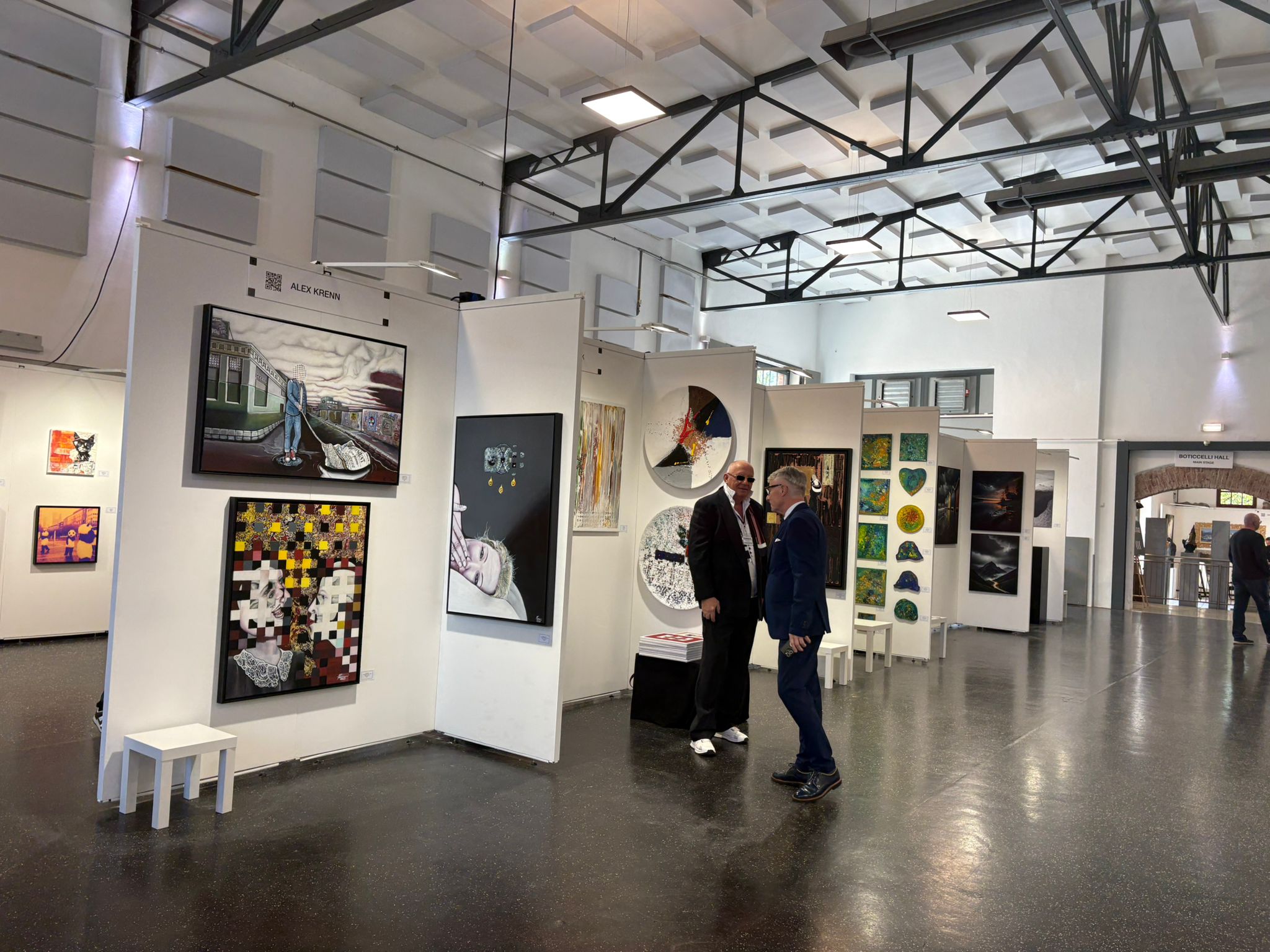

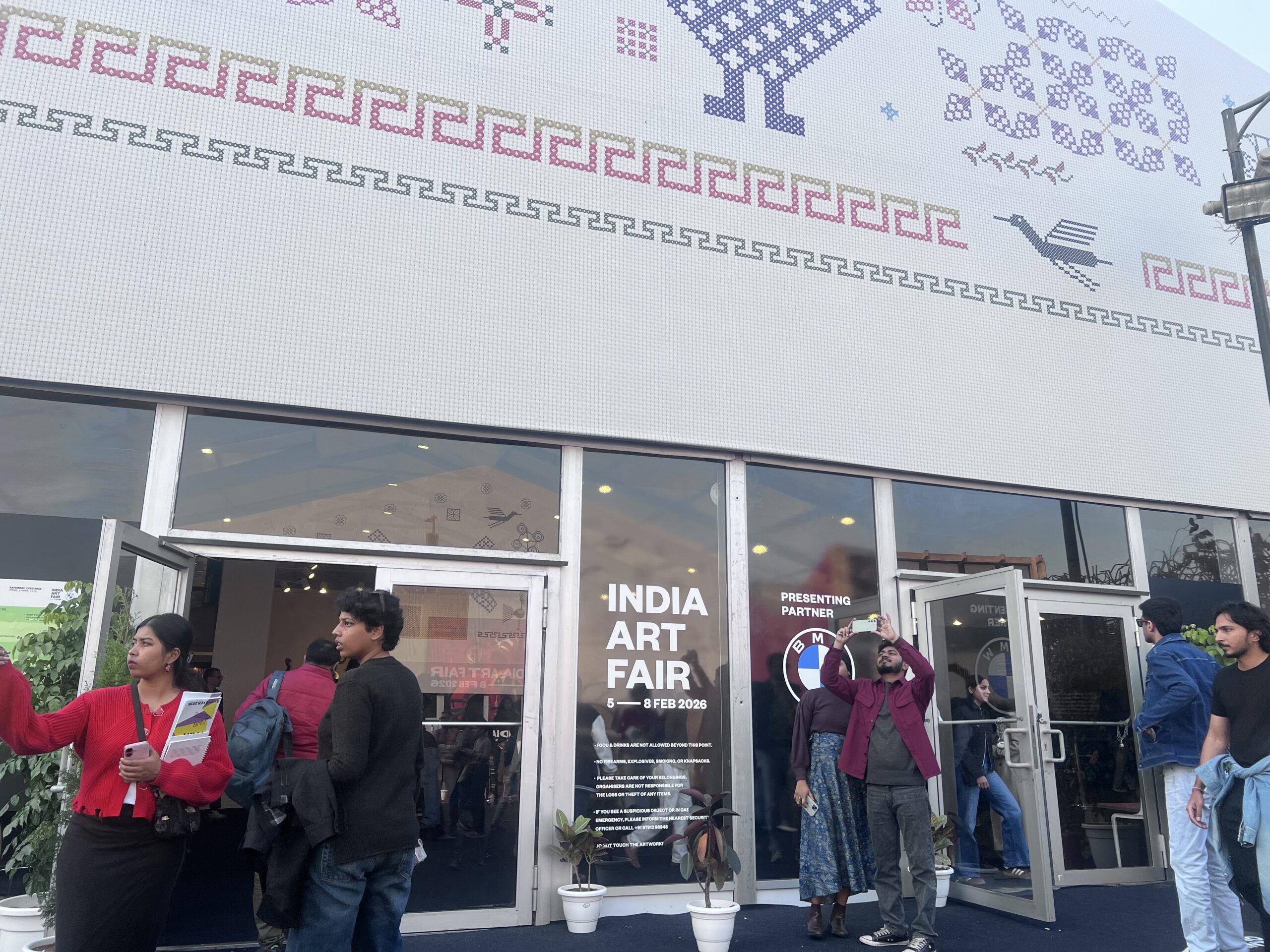
Last week, The Art Fair Guy visited India Art Fair 2026 in New Delhi, and the energy on the ground confirmed what the global market has been sensing for years: India is no longer “emerging”, it is consolidating. The fair’s 17th edition runs February 5 to 8, 2026 at the NSIC Exhibition Grounds (Okhla), New Delhi, bringing together a record-scale exhibitor list and a programme that increasingly looks like a regional ecosystem, not just a sales floor.
At the same time, however, the international spotlight has been tugged hard towards the Gulf, because Art Basel Qatar is happening almost in parallel, February 5 to 7, 2026 in Doha, with preview days on February 3 and 4. The proximity of these two heavyweight fairs is already reshaping February travel routes, collector calendars, and press attention.
Watch: Full walkthrough video from India Art Fair 2026
Key facts at a glance
-
Event: India Art Fair 2026 (17th edition)
-
Dates: Feb 5 to 8, 2026
-
Venue: NSIC Exhibition Grounds, Okhla, New Delhi
-
Scale: Record 135 exhibitors (including 94 commercial galleries)
-
Presenting Partner: BMW India
Highlights from India Art Fair 2026
1) A record exhibitor lineup, with clearer global positioning
India Art Fair is leaning into its role as the key marketplace for modern and contemporary art from South Asia, while also sharpening its international pull through new exhibitors and diaspora-facing galleries. BMW’s official communications emphasise the fair’s breadth and the addition of new exhibitors as part of its growth strategy.
2) The fair experience is expanding beyond “booths”
India Art Fair’s programme is increasingly built to serve three audiences at once: collectors, institutions, and the next generation of art professionals. The Talks Programme (curated by Shaleen Wadhwana) and the wider programming structure signal a fair that wants to actively shape discourse, not only transactions.
3) Public-facing commissions and high-visibility activations
BMW’s decade-long partnership is marked this year by a major commission and branded cultural activations, including a high-profile façade moment that extends the fair into the city’s visual memory and social media circulation.
4) A stronger “city effect”
The fair narrative is not confined to the venue anymore. Media previews and fair guides point to a broader citywide orbit around New Delhi during the fair days, making India Art Fair more of a cultural week than a standalone event.
How India Art Fair is changing the Indian art market
India Art Fair’s most important impact is structural. It is not only reflecting demand, it is actively building the market infrastructure.
-
It professionalises the primary market: galleries use IAF as the key moment to present ambitious curatorial positions and to meet buyers who now expect international-level presentation and provenance standards.
-
It pulls the diaspora closer to the region: the fair’s growing international mix helps connect South Asian artists and collectors across borders and creates easier pathways for cross-market buying and representation.
-
It legitimises South Asia as a global collecting territory: institutional presence, programming depth, and international attendance strengthen the perception that serious collectors must understand India, not just “visit once.”
In short, India Art Fair is increasingly a market engine for the region, shaping tastes, careers, and the pace of gallery growth.
The Doha factor: how Art Basel Qatar “stole the spotlight” this weekend
Let’s be blunt: global art media and top-tier international travel patterns are currently biased toward the new thing, and this week the “new thing” is Art Basel Qatar.
Why the spotlight shift is happening:
-
Art Basel’s brand gravity: a new Art Basel edition instantly becomes a must-cover event for global press and a must-attend checkpoint for many VIPs.
-
Concise scale, high density: the inaugural edition is positioned as tightly curated, with 87 galleries and 84 presentations, across multiple Doha venues.
-
City integration as a strategy: reporting highlights how Art Basel Qatar uses public and cultural spaces in Msheireb, extending beyond a single fair hall and turning the city into part of the experience.
Why the calendar proximity is actually fascinating
Having New Delhi (Feb 5–8) and Doha (Feb 5–7) collide is not just inconvenient. It is revealing.
-
Collectors now have to choose, or split teams. That is new pressure on India Art Fair, but it also proves IAF is important enough to be part of a global scheduling conflict.
-
South Asia and MENA are being discussed in the same breath. Art Basel Qatar explicitly positions itself as a platform connecting MENA and South Asia, which can create long-term cross-regional momentum rather than pure competition.
-
The winner is the regional circuit. If this overlap remains, we may see a new “February corridor” forming, where collectors, museums, and advisors plan a dual-region week.
Practical takeaway for artists and galleries
If you are an artist or gallery looking at 2026 and 2027 planning, treat February as a strategic decision point:
-
India Art Fair is where you build South Asian market depth and serious regional relationships.
-
Art Basel Qatar is where you test GCC collector proximity and institutional connections at a global mega-brand platform.
For anyone applying to international fairs more broadly, it helps to understand how organisers structure rules, logistics, and participation requirements.
Work with The Art Fair Guy
If you want to enter the Indian market, expand into MENA, or decide which fair actually fits your work and pricing, I offer paid consulting for artists and galleries: fair selection, application strategy, booth presentation, pricing, and collector outreach.
Contact me at office@theartfairguy.com