
Rules, Delivery, Hanging, Sales, Insurance, and Onsite Checklists
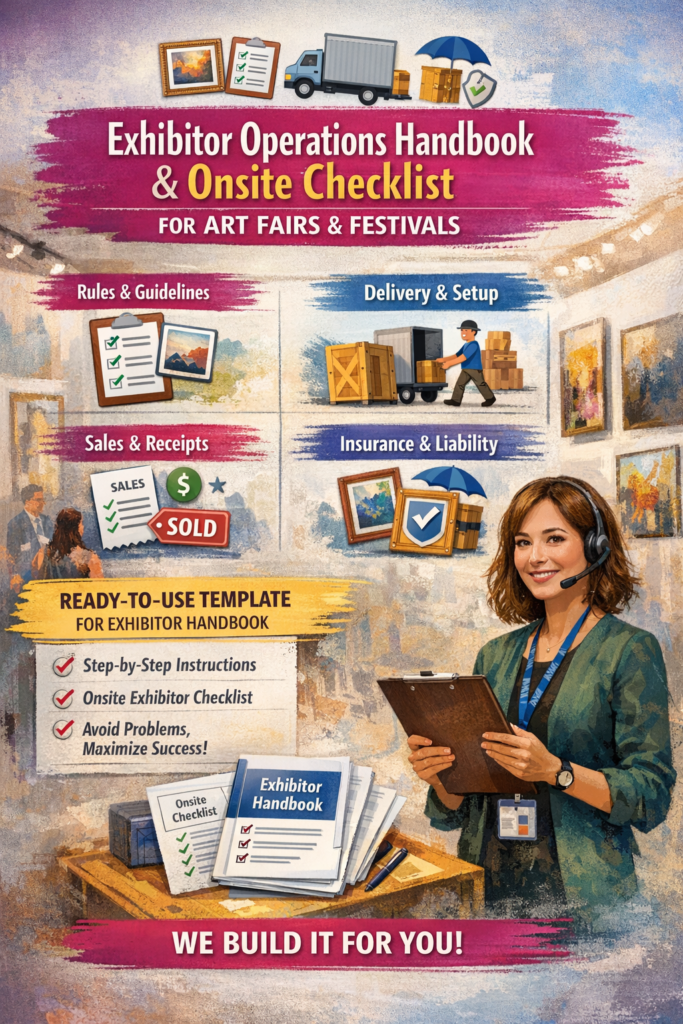
If you run an art fair or art festival, your exhibitor experience is only as strong as your operations handbook. A clear exhibitor manual template prevents last minute chaos, protects the venue, improves booth presentation, and reduces disputes around sales, insurance, and removals.
This article gives you a ready to use guidelines handbook template for exhibitors, plus a practical structure you can adapt to any event size, from emerging artist fairs to multi hall festivals. It’s based on real world exhibitor guideline practices used by major events, including detailed curation rules, setup requirements, payment workflows, and insurance recommendations.
What an exhibitor operations handbook must achieve
Your handbook is not marketing. It’s a contract like guide that makes expectations crystal clear and gives exhibitors a step by step plan to arrive prepared.
A strong exhibitor handbook should:
-
Reduce onsite questions by answering the top 50 operational issues in advance
-
Protect the venue with clear rules on walls, floors, power, and safety
-
Ensure consistent booth presentation with curation and hanging standards
-
Define a fair and traceable sales process including receipts and artwork release
-
Set insurance and liability boundaries clearly, including what the organizer covers and what the exhibitor must cover
The Exhibitor Operations Handbook Template
Copy and paste structure for your event
1. Welcome and key contacts
Include:
-
Event name, edition, venue, hall names
-
Event dates, VIP preview, public days, opening hours
-
Organizer office location onsite
-
Emergency contacts, security, medical, logistics partner
-
One email address for exhibitor support, plus escalation path
Pro tip: put a one page “Quick Start” right after the welcome. It should link to deadlines, upload portals, and the setup schedule.
2. Timeline and deadlines
Create a simple table with:
-
Contract and participation confirmation deadline
-
Exhibitor profile and artwork upload deadline
-
Layout submission deadline
-
Shipping booking deadline
-
Badge request deadline
-
Setup and dismantling windows
Many professional events require exhibitors to submit booth layouts and artwork details for approval by specific deadlines.
3. Exhibitor portal and required submissions
If you use an exhibitor portal, include:
-
Login instructions
-
What is mandatory, for example logo, cover image, artworks, prices, dimensions
-
What happens if exhibitors do not complete their profiles, for example missing visibility in directory, map, or website listings
Recommended required submissions
-
Exhibitor profile and contact details
-
Artwork list including title, medium, size, edition, retail price
-
High resolution images for directory and press
-
Floorplan or wall layout with positions and dimensions
4. Curation and display rules
This is where organizers protect quality and visitor experience.
Include clear rules on:
-
Maximum wall coverage and minimum spacing
-
No cluttering, no artworks on the floor, no leaning artworks
-
Works on paper must be framed or mounted to a rigid support
-
Price labeling requirements and currency rules
-
Local cultural compliance rules if applicable
Example rules used by established fairs
-
Maintain visible wall space and consistent spacing between artworks to avoid a cluttered presentation
-
Approved works only. Unapproved works may be removed or the exhibitor may lose promotional visibility
-
No taping works to walls. Use proper hanging systems and framing standards
-
Some events restrict hardware use on panels, allowing only provided hooks and chains and prohibiting screws or nails to avoid damage
5. Technical specs for booths and walls
Provide exact specs so exhibitors can plan production and hanging.
Include:
-
Wall height, wall material, load limits
-
Allowed hanging methods, required eyelets or hanging hardware
-
Power supply and socket locations, rules for additional power
-
What is included in the shell scheme and what is paid add on
-
Lighting rules and optional upgrades
6. Delivery, shipping, and onsite logistics
This section prevents the biggest onsite bottlenecks.
Include:
-
Delivery addresses and access routes
-
Vehicle rules and unloading time limits
-
Trolley rules, rental options, and deposit info if you offer it
-
Storage rules. Limited storage should be clearly stated
-
Packaging requirements, labeling, and pickup procedure
Advanced option: publish recommended logistics partners and explain customs and non EU processes if relevant.
7. Setup and dismantling rules
Make it impossible to misunderstand.
Include:
-
Setup days and times, early access rules
-
Deadline when booths must be fully ready before opening
-
Required safety gear during build up, for example high visibility vests, closed shoes
-
No children during build up and dismantling if your venue requires it
-
Dismantling start time, and strict prohibition to dismantle before closing if applicable
-
Rules for abandoned artworks and liability if left behind
8. Sales rules, payments, receipts, and artwork release
This section protects exhibitors, buyers, and the organizer.
Include:
-
Accepted payment methods
-
Card processing fees and settlement timing
-
Where receipts must be stamped or validated before artworks can leave the venue
-
Wrapping station rules if you offer free wrapping
-
Collection procedure for sold works and security checks at exits
Price tag minimum content
-
Artist name
-
Artwork title
-
Medium, size, edition
-
Retail price in local currency
-
Contact details or QR code to catalog page
9. Insurance and liability
Be very explicit. This prevents disputes after damage, theft, or transport incidents.
Include:
-
What the organizer insures, for example third party liability for the venue
-
What the exhibitor must insure, for example artworks during transport and while on display
-
Clear limitation of organizer responsibility for theft or damage
-
Recommendation that exhibitors take out their own coverage for theft, vandalism, water leakage, and transport risks
10. Marketing, programming, and onsite features
If you offer optional programming, add a simple process.
Examples:
-
Art walks or curated tours with submission requirements and limited slots
-
Talks, open forums, or panel sessions with signup process
-
VIP guest list submission rules and maximum guest count
-
Gift shop or merchandising participation process
11. Prohibited activities and venue rules
Keep this short but firm.
Include:
-
No drilling into venue structures, no damage to panels
-
No hazardous materials
-
No early dismantling
-
No unrelated flyer distribution
-
No leaving waste in the booth
12. Appendices
This is where your handbook becomes “operationally complete”.
Recommended appendices:
-
A. Onsite exhibitor checklist
-
B. Artwork label template
-
C. Delivery label template
-
D. Booth layout template
-
E. Incident report form
-
F. Approved service providers list
Onsite Exhibitor Checklist
A practical one page checklist you can include
Before arrival
-
Badge printed or collected and access confirmed
-
Artwork list finalized with prices and dimensions
-
Insurance policy confirmed for transport and display
-
Hanging hardware installed on frames, eyelets included
-
Packing labeled with exhibitor name and booth number
Build up day
-
Safety gear worn, closed shoes
-
Vehicle unloaded within allowed time window
-
Walls checked for damage before installation
-
Layout executed with correct spacing and no floor leaning works
-
Price labels installed, no discount language on labels
-
Cash handling plan ready, card payment plan confirmed
During show days
-
Booth staffed during opening hours
-
Inventory tracked
-
Receipts issued and stamped where required before artwork leaves
-
Sold works wrapped and released via security process
Dismantling
-
Dismantling starts only after official closing if required
-
Packing removed on time
-
No artworks left behind
Common mistakes organizers make
-
Handbook is too long but still missing the critical details: delivery routes, setup deadline, sales release rules.
-
No single source of truth: exhibitors get WhatsApp messages that contradict the handbook.
-
Curation rules exist but are not enforceable: no pre approval process, no layout submission.
-
Insurance wording is vague: exhibitors assume the organizer covers everything.
-
No onsite checklist: staff and exhibitors improvise.
FAQ
What is the difference between an exhibitor manual and an exhibitor operations handbook?
An exhibitor manual often mixes marketing and venue info. An operations handbook is stricter and includes enforceable rules, deadlines, and procedures for delivery, hanging, sales, and liability.
How long should an exhibitor handbook be?
Most fairs land between 10 and 30 pages, plus appendices. The goal is clarity, not length. The best structure is a short quick start plus detailed sections exhibitors can search.
Should I require layout submission?
If you care about booth quality and visitor experience, yes. Several established events require exhibitors to submit layout plans and artwork details for approval.
Do I need to provide exhibitor insurance?
Many organizers provide venue level third party liability, but still recommend exhibitors arrange their own coverage for artworks, transport, theft, and damage.
Done for you exhibitor handbook and onsite checklist
If you want this done professionally, The Art Fair Guy can build your complete exhibitor operations handbook, customized to your venue, booth types, local regulations, shipping reality, and your brand tone.
What you get:
-
A complete exhibitor handbook in your format of choice (PDF, Google Doc, portal ready sections)
-
A one page onsite checklist for exhibitors and a separate staff checklist for enforcement
-
Clear curation and display rules that protect quality without creating friction
-
Delivery and sales workflows that reduce disputes and protect your event
If you want, tell me your event name, dates, venue, and booth system in one message and I will turn this template into a finished handbook structure with your exact sections and copy.
Contact us at office@theartfairguy.com
Art Fair and Festival Consultancy Middle East