
The art fair landscape is quietly changing. Not at the very top, where blue chip galleries can still justify massive booths and global travel, but where most of the market actually lives: emerging and mid tier galleries, independent artists, project spaces, and new collectors buying their first serious works.
In that segment, one model keeps gaining momentum: the hybrid art fair, where galleries and independent artists exhibit side by side under one curated umbrella.
Done well, hybrid fairs solve a real market problem. They lower barriers, widen discovery, and create a healthier pipeline from “I like this” to “I bought this” for a new generation of collectors.
Below is a practical, market facing look at what hybrid art fairs are, why they are rising, and why the Middle East is missing a major opportunity here.
What is a hybrid art fair?
A hybrid art fair is a fair that welcomes both:
-
Galleries (presenting curated rosters and representing artists), and
-
Independent artists, collectives, and project spaces (presenting directly, often with more experimental or personal narratives)
The important point is not “anyone can join.” The strongest hybrid fairs are not open wall rentals. They are curated formats that combine the strengths of both worlds:
-
galleries bring market structure, collector relationships, and professional presentation
-
artists and project spaces bring discovery, energy, and new aesthetics
-
the fair brings the curatorial filter and selling focused visitor experience
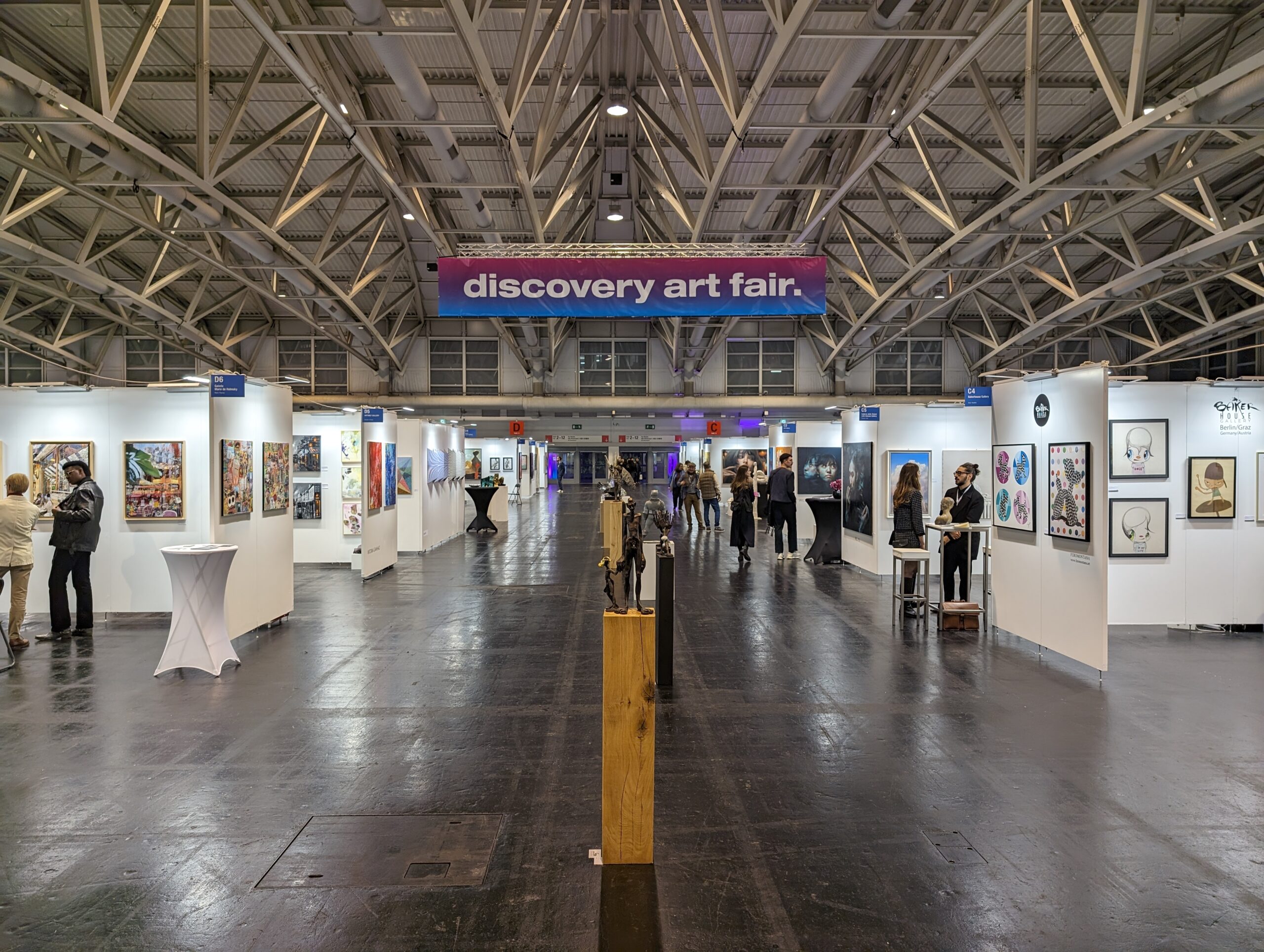
You can see the concept in established examples like Discovery Art Fairs Germany, or ARTMuc in Munich Germany, which positions itself as a meeting point for young galleries and independent initiatives.
Why hybrid fairs are on the rise in the emerging and mid tier market
1) Traditional art fairs have become brutally expensive for smaller galleries
For many small and mid tier galleries, a fair is no longer just booth fees. It is shipping, travel, staffing, hotels, production, insurance, and opportunity cost.
Recent reporting shows how quickly total participation costs can climb, with booth fees alone often starting in the high four figures and pushing into much higher tiers depending on the fair.
Hybrid fairs create a pressure valve:
-
smaller galleries can join at more realistic entry points
-
project spaces and artists can participate without pretending they are full scale galleries
-
the fair can keep quality high while broadening participation
2) Collectors want discovery, not just brand names
The fastest growing collector segment globally is not buying museum scale works. They are building taste, learning, and upgrading gradually.
Hybrid fairs are structurally better at discovery because they allow:
-
direct conversations with artists
-
curated gallery presentations in the same visit
-
a broader price range without turning the fair into a craft market
3) The emerging market works best with price discipline and clarity
The most commercially successful fairs in the accessible segment win because they reduce buyer uncertainty. They build trust through clear rules: transparent pricing, consistent labels, verified authenticity, defined edition limits, and professional presentation standards.
You see this approach across well run fair formats. Many operate with price ceilings to keep the offer accessible, and they require non negotiable wall labels so every visitor instantly understands what they are looking at and what it costs. Strong organizers also enforce clean hanging standards such as minimum spacing, no overcrowding, and a clear visual rhythm that makes booths feel collectible rather than cluttered. On top of that, fairs often restrict reproductions and uncontrolled editions, because collectors need confidence that what they buy is genuinely limited and properly documented.
Hybrid fairs can apply exactly the same discipline while keeping the key advantage of the model: a curated mix of galleries and independent artists. When both groups follow the same transparency and presentation rules, the fair feels coherent, premium, and far easier to buy from.
4) Hybrid fairs match how artists actually build careers in 2026
Today’s emerging artists often move between:
-
direct sales
-
gallery representation
-
pop ups and project spaces
-
online discovery
A hybrid fair reflects that reality. It becomes a bridge, not a gate.
What makes a hybrid fair succeed (and what makes it fail)
Hybrid is not automatically good. The difference between a respected hybrid fair and a forgettable one is curation plus structure.
The winning formula
Curated selection: clear quality threshold, coherent aesthetics, no filler
Transparent pricing: consistent ranges, no “DM for price” culture
Clean presentation: spacing, proper labels, no overcrowding
Collector onboarding: tours, guided buying prompts, clear categories
Fair governance: rules on editions, authenticity, and what is not allowed
Many fair manuals show how strict display rules help sales: minimum spacing, avoiding clutter, and ensuring labels are consistent.
The failure mode
If a fair mixes galleries and artists but lacks curation, it becomes:
-
visually messy
-
confusing for collectors
-
unfair to serious exhibitors
-
difficult to market as premium
Hybrid fairs must avoid “rent a wall” optics. The fair’s reputation depends on selection.
Why the Middle East is missing this model (and why the timing is perfect)
The Middle East has strong art events, but the fair ecosystem often polarizes into two formats:
-
High end gallery focused fairs
Art Dubai, Art Basel Qatar and Frieze Abu Dhabi explicitly structured around gallery programs and defined sections. -
Large open platform fairs where artists and galleries participate, but curation is primarily compliance based
World Art Dubai includes artists and galleries and enforces clear display rules and price structures. But the region still lacks enough boutique, curated hybrid fairs that sit cleanly between “major gallery fair” and “mass participation a the opportunity is growing now
-
New regional attention: global players are moving into the Gulf. The Financial Times reported Art Basel’s expansion into Qatar, signaling long term market commitment to the region.
-
Collector growth needs a pipeline: a curated hybrid fair is ideal for converting new audiences into repeat buyers through accessible, well presented work.
-
Emerging artists need structured marketplaces: the region has more open calls, residencies, and institutional programs, but fewer selling focused, curated stepping stones that connect artists to collectors.
In short: the Middle East has the energy, venues, and audience growth. What is missing is a strong mid tier marketplace format that is curated for selling.
A practical blueprint for a well curated hybrid art fair in the Gulf
If you want this model to work in the UAE, Saudi, or Qatar, build it like this:
1) Two tracks, one standard
-
Gallery Track: curated booths, strong program identity
-
Artist Track: solo presentations and project spaces
Both must follow the same label, pricing, and presentation rules.
2) Clear selection criteria
Publish what you accept and what you reject. This protects the fair’s identity and makes collector marketing easier.
3) Price architecture that builds trust
Use structured price bands that make sense for emerging and mid tier buyers. Combine that with transparency on editions and authenticity, similar to the standards used by established fairs.
4) Collector experience that feels premium
-
guided tours
-
concierge introductions
-
clear category signage
-
quiet seating areas
-
simple purchase flow
5) Content engine
Hybrid fairs win online because they generate stories: artists, galleries, cross cultural narratives, and behind the scenes insight. That content drives both ticket sales and exhibitor demand.
Why this matters for artists and galleries
For artists: hybrid fairs offer visibility, direct collector contact, and a real pathway into gallery relationships without pretending you already have them.
For galleries: hybrid fairs reduce risk, widen discovery, and connect you to collectors who are still forming taste.
For collectors: hybrid fairs are easier to buy in because they combine professional structure with the excitement of discovery.
The Art Fair Guy Consultan
If you are planning a hybrid art fair, or you want to upgrade an existing fair from “open participation” to “curated and sales driven,” we can help you design the exhibitor standards, pricing logic, booth mix, and collector programming so the model works commercially and looks premium.
Contact us at office@theartfairguy.com or visit our Art Fair Consultancy page
FAQ
Are hybrid art fairs the same as online plus offline fairs?
Not in this article. Here, “hybrid” means galleries plus independent artists in one fair, not a digital viewing room add on.
Do hybrid fairs harm galleries by letting artists sell direct?
Not if curated correctly. The strongest hybrid fairs create a funnel where galleries discover artists and collectors discover galleries. The fair sets rules so the ecosystem stays professional.
Why does the emerging market benefit most?
Because cost sensitivity is highest, collector onboarding is essential, and discovery is the primary value. Rising fair costs make alternative models more attractive.
Why is the Middle East a good fit?
Because the region is investing heavily in culture and attracting global attention, while still needing more structured mid tier marketplaces that build new collectors.
Find more Articles about this Topic here:
Art Fairs for Independent Artists to Exhibit Without a Gallery