
If you want consistent art sales in the GCC, interior designers can be one of your strongest buyer channels.
Why? Because designers do not buy one artwork once. They buy repeatedly for projects. They also influence high value clients, developers, hotels, restaurants, offices, and private villas. That makes this a high intent niche, and if you are searching sell art to interior designers GCC, you are already thinking like a commercial artist.
This guide shows you exactly how to work with interior designers in the GCC, how to find them, how to approach them, and how to turn one sale into repeat buyers.
Why interior designers are the smartest repeat buyer channel in the GCC
Interior designers in the GCC operate inside a powerful ecosystem:
-
Private villa clients with high budgets
-
Hospitality projects: hotels, resorts, serviced apartments
-
F&B: restaurants, lounges, cafes
-
Corporate: offices, clinics, luxury retail
-
Developers: show apartments and staged units
Designers need art constantly. They also need reliability: correct sizes, deadlines, delivery, framing, installation coordination, invoices, and consistency. If you become the artist who is easy to work with, you can build a repeat buying pipeline.
Understand how interior designers actually buy art
Designers typically source art in three ways:
1) Direct from artists
This is where you can win, especially if you are professional and fast.
2) Through art consultants and procurement agencies
Still possible, but the margins can be tighter and the process more formal.
3) Through galleries and art suppliers
Common for larger projects, but not always where they find unique emerging artists.
Your strategy should cover all three, but your fastest route is usually direct relationships with designers.
The most important mindset shift: you are selling solutions, not only artworks
A designer is not browsing for “what they personally like.” They are solving a brief.
They care about:
-
Size and format options
-
Color compatibility
-
Style consistency across multiple pieces
-
Delivery timelines
-
Budget per piece and per set
-
Framing and installation readiness
-
Paperwork and professional communication
If you present your work in a “project friendly” way, designers take you seriously.
Step 1: Package your work for design projects
Before outreach, prepare a designer ready offer.
Create 3 productized “collections”
Instead of sending 40 random images, build 3 clear bodies of work:
-
Collection A: calm, minimal, neutral palette
-
Collection B: bold statement works
-
Collection C: premium large scale works
Each collection should have:
-
10 to 20 works that feel coherent
-
Standard sizes and also “can be commissioned” options
-
Clear pricing ranges
Offer sets and series
Designers love sets because they fill walls quickly:
-
Diptychs and triptychs
-
3 to 6 piece series
-
A full wall concept for hospitality corridors
Offer commissions in a controlled way
You do not want endless custom changes. Offer:
-
Commission options within your style
-
Defined timeline
-
Defined number of revisions
-
Deposit rules
This turns you into a reliable supplier.
Step 2: Build a designer pitch deck that converts
A pitch deck for designers is not an artist portfolio. It is a sourcing tool.
Include:
-
One page: your style summary and what you offer
-
3 pages: your collections with 6 to 9 images each
-
Size and format page: standard sizes and custom options
-
Pricing page: ranges and trade pricing policy
-
Production page: lead times, framing, shipping, installation readiness
-
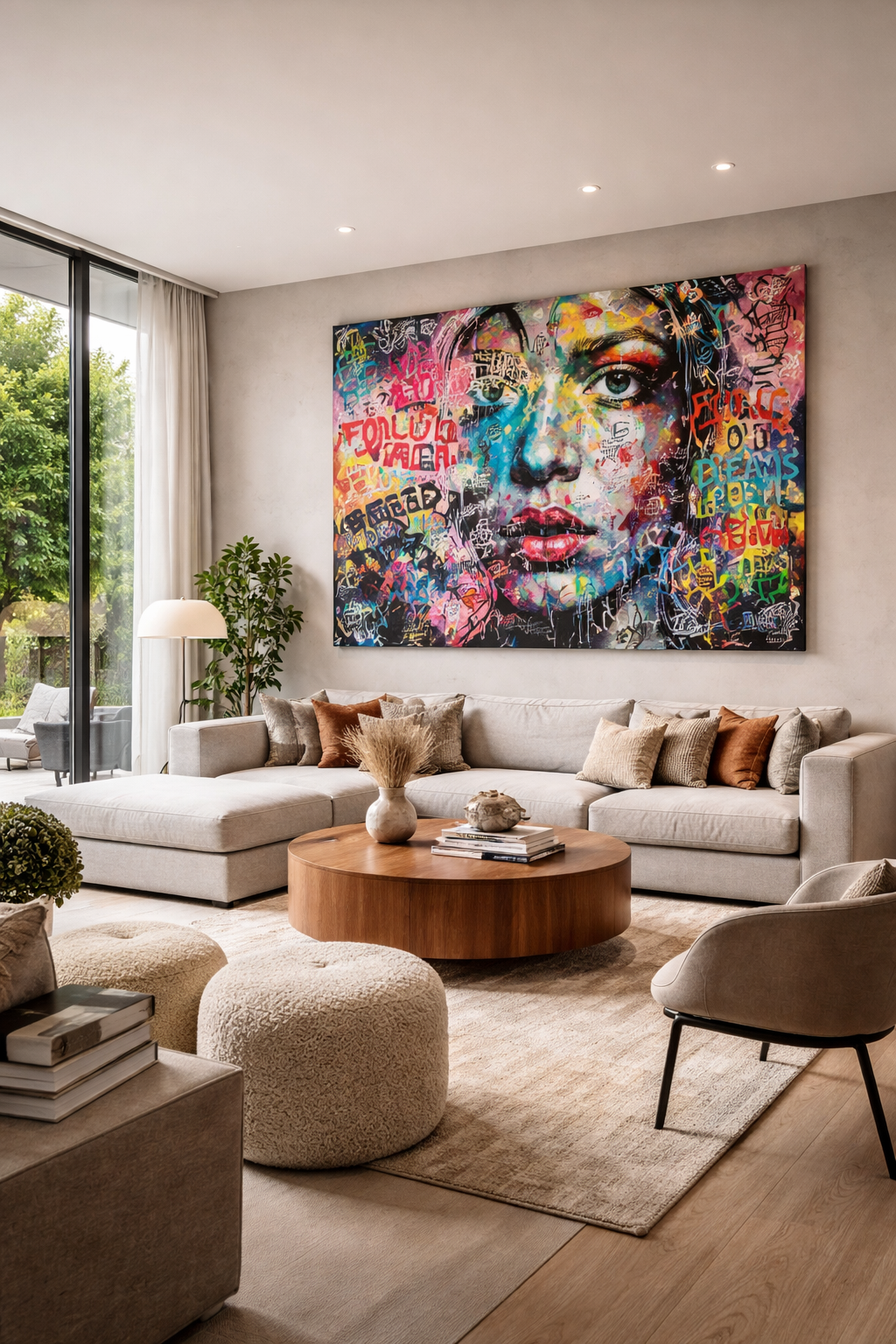
Project examples: mockups of your art in interiors
-
Contact page: WhatsApp, email, website, Instagram
Keep it clean. Designers value speed.
Step 3: Offer trade pricing without devaluing your art
Many designers expect trade pricing because they manage budgets and bring volume.
A simple approach:
-
10 to 20 percent trade discount for repeat orders
-
Better discounts only for larger quantities
-
Offer “value adds” instead of discounts: free framing upgrade, faster delivery, mockups
Set rules early so you do not negotiate every time.
Step 4: Where to find interior designers in the GCC
This is the core question: how to find them fast.
Here are the highest quality channels:
1) Instagram and LinkedIn search systems
Instagram:
-
Search hashtags: interior design dubai, interior designer dubai, dubaidesign, ksa interior design, saudi interior designer, qatar interior design, bahrain interiors, kuwait interior design
-
Search locations: Dubai Design District, DIFC, Jumeirah, Abu Dhabi, Riyadh, Jeddah, Doha
-
Look for posts showing completed projects and tagged suppliers
LinkedIn:
-
Search job titles: Interior Designer, Design Director, FF&E, Procurement Manager, Project Manager, Design Manager
-
Filter by city: Dubai, Abu Dhabi, Riyadh, Jeddah, Doha, Kuwait City, Manama, Muscat
-
Save companies and decision makers
2) Design directories and associations
Look for:
-
Interior design studios with hospitality portfolios
-
Architecture firms with interior departments
-
Fit out companies with design teams
-
Boutique studios in high end residential
3) Hospitality and developer project lists
Designers working on hotels and real estate projects need art constantly.
Search for:
-
New hotel openings and refurb projects
-
New residential developments and show units
-
Restaurant group expansions
Then identify the design studio behind the project and approach them with relevant art.
4) Events and design hubs in the GCC
Where designers congregate:
-
Design weeks and design district events
-
Architecture and interiors trade events
-
Gallery openings in design heavy neighborhoods
-
Hotel industry networking events
Your goal is not attendance only. It is lead capture: names, WhatsApp numbers, emails.
Step 5: Build a targeted outreach list (not a random list)
Do not contact 300 designers with generic messages.
Build a list of 30 to 80 highly relevant studios and contacts first.
For each contact, note:
-
Project type: hospitality, residential, corporate
-
Style: minimal, luxury glam, contemporary, organic modern
-
Budget level: mid, premium, ultra luxury
-
Recent projects: link and screenshots
This allows you to send a message that feels personal and professional.
Step 6: Outreach messages that get replies
Designers are busy. Your message must be short and useful.
Instagram DM template
Hi (Name), I love your work on (project name or post reference). I am an artist based in (location) and I create (one sentence style description). I work with designers on project ready artworks and series, including custom sizes within my style.
Can I send you a short designer deck with options that fit your aesthetic?
Email template
Subject: Art options for your projects in (City)
Hello (Name),
I am (Your Name), an artist working with interior designers on project ready artworks and series. I came across your studio via (project). Your aesthetic feels aligned with my (collection name or style in one line).
I can supply:
-
ready to install artworks in standard sizes
-
series sets for corridors and large walls
-
commissions within my style with defined lead times
Would you like me to send you a short designer deck with curated options?
Best regards,
(Name)
(WhatsApp)
(Website)
(Instagram)
WhatsApp follow up
Hi (Name), just following up on my email about art options for your projects. Happy to send a short deck here if that is easier.
Rule: one follow up only unless they reply. Keep it professional.
Step 7: Make it easy for them to say yes
Designers love speed. The easier you make the process, the higher your conversion.
Offer:
-
Quick PDF deck
-
A link to a clean gallery page with collections
-
Instant price list ranges
-
Mockups for their project walls
-
Delivery timelines and framing info
The key is reducing friction.
Step 8: How to turn one sale into repeat business
Repeat business happens when you become their trusted supplier.
Do this after the first order
-
Deliver early if possible
-
Send professional invoices
-
Include care instructions
-
Ask for installed photos
-
Offer the next step: “If you have another project coming up, I can suggest matching pieces from the same collection.”
Create a designer follow up system
Every 6 to 8 weeks:
-
Send 5 new works
-
Send one project mockup
-
Remind them of lead times and what you can do fast
Consistency wins.
Build a “designer only” WhatsApp broadcast list
Only for designers and consultants. Keep it tasteful:
-
one update per month
-
new works and available series
-
no spam
Step 9: Avoid common mistakes artists make with designers
-
Sending massive random portfolios
-
No prices, no sizes, no delivery timelines
-
Slow replies
-
Over promising on commissions
-
Negotiating discounts without rules
-
Not being installation ready
-
Not understanding the project brief
If you fix these, you immediately stand out in the GCC market.
How The Art Fair Guy helps artists work with interior designers in the GCC
If you want direct links to interior designers, you need a structured approach and a credible presentation.
The Art Fair Guy is deeply connected to the GCC art ecosystem through work as curator and advisor across large scale art fairs and cultural projects in the region. That means access to real market insight, real networks, and the expectations of buyers and decision makers.
Consulting support for artists
The Art Fair Guy can help you with:
1) Designer pitch deck creation
A clean, project friendly deck tailored to GCC design studios, with your collections, sizes, pricing logic, and mockups.
2) Outreach list build
A targeted list of relevant interior designers and studios in the GCC aligned with your style and medium, including the right contacts for sourcing and procurement.
3) Outreach campaigns that get replies
Email, Instagram, and WhatsApp messaging sequences, plus a follow up system that builds repeat business.
4) Network amplification
The Art Fair Guy runs a GCC focused newsletter with more than 8,000 artists in the region and strong connections across the art and exhibition landscape. That ecosystem insight helps position you commercially and connect you with the right circles faster.
If you want to sell art to interior designers in the GCC and build repeat buyers, reach out to The Art Fair Guy for a designer pitch deck, a targeted outreach list, and a full outreach campaign setup.
Contact us at office@theartfairguy.com
FAQ
How do I find interior designers in the GCC as an artist?
Use Instagram and LinkedIn to identify studios by city and project type, then build a targeted list based on style alignment. Focus on studios with active hospitality and high end residential portfolios.
Do interior designers buy art directly from artists?
Yes, especially for custom sizes, series sets, and unique artworks. They buy directly when the artist is professional, fast, and project ready.
Should I offer a discount to interior designers?
Offer trade pricing with clear rules, or provide value adds like framing upgrades. The goal is repeat volume without devaluing your work.
What should I send to an interior designer first?
A short designer deck with curated collections, sizes, pricing ranges, delivery timelines, and mockups. Make it easy to decide quickly.
How do I get repeat buyers from designers?
Deliver professionally, follow up every 6 to 8 weeks with new options, and position yourself as a reliable supplier for multiple project types.