
When Affordable Art Fair Vienna arrived in 2025, it entered a city that seemed to be experiencing an art fair boom. Vienna had suddenly become one of the most crowded art fair calendars in Central Europe, with contemporary fairs, antiques fairs, artist-focused formats, hotel fairs, paper-focused formats and hybrid events all competing for collectors, galleries, sponsors and attention.
One year later, the mood feels very different.
The second edition of Affordable Art Fair Vienna took place from 28 to 31 May 2026 at Marx Halle. On paper, the fair continued to build on its successful launch. The official positioning remained strong: contemporary art by living artists, transparent pricing from €100 to €10,000, an accessible collecting concept and more than 60 local and international galleries. The fair is professionally organized, easy to understand for new collectors and clearly fills a gap between traditional gallery fairs and broader lifestyle-oriented cultural events. However, the bigger question after visiting the 2026 edition is no longer only about Affordable Art Fair Vienna itself. The question is about Vienna.
Is the city reaching art fair fatigue?
Affordable Art Fair Vienna 2025 vs 2026
The first edition in 2025 was important because it brought an internationally recognized affordable art fair brand to Austria for the first time. Taking place from 22 to 25 May 2025 at Marx Halle, it introduced a format that is already known in cities such as London, Amsterdam, Brussels, Berlin, Hamburg, New York, Hong Kong and Singapore.
The concept was clear: make collecting art less intimidating, show prices transparently and give first-time buyers a reason to enter the market. In Vienna, the fair launched with 58 galleries and more than 350 artists. That was a respectable start for a first edition in a city with a strong museum culture, but a comparatively fragile commercial art fair ecosystem.
For 2026, Affordable Art Fair Vienna returned to Marx Halle for its second edition. Public communication points to more than 60 galleries, with many sources listing 62 galleries, again presenting around 350 artists. So the fair did not shrink in a simple numerical sense. If anything, it grew slightly.
| Category | 2025 Edition | 2026 Edition |
|---|---|---|
| Edition | First edition in Vienna | Second edition in Vienna |
| Dates | 22 to 25 May 2025 | 28 to 31 May 2026 |
| Venue | Marx Halle | Marx Halle |
| Galleries | 58 galleries | 60+ galleries, publicly listed as 62 in several event listings |
| Artists | 350+ artists | around 350 artists |
| Price range | €100 to €10,000 | €100 to €10,000 |
| Positioning | Accessible contemporary art fair | Accessible contemporary art fair with broader local visibility |
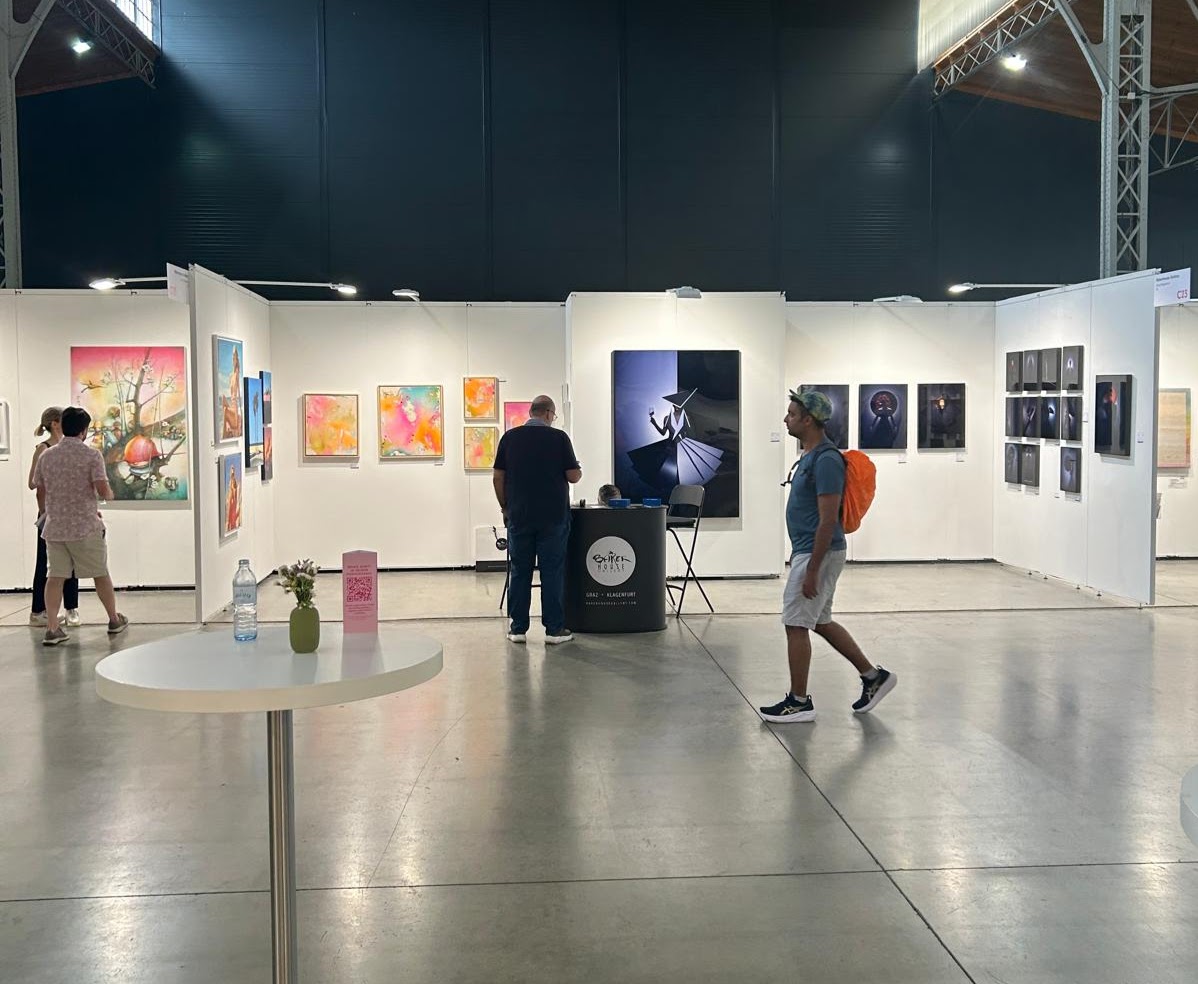
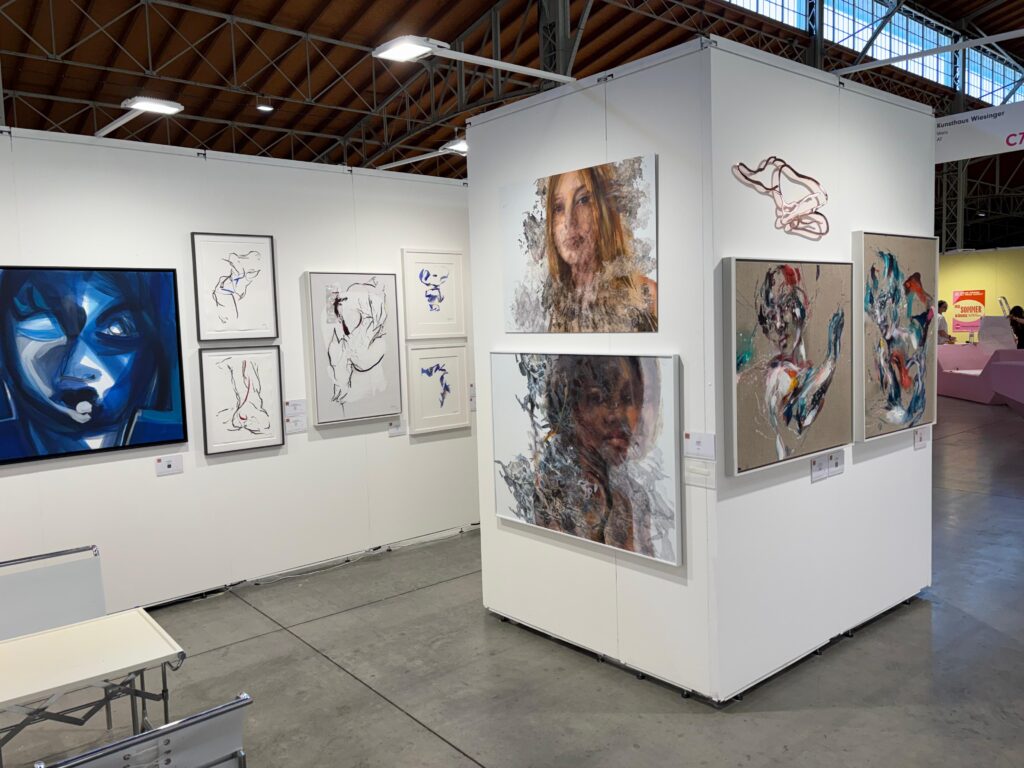
This makes the 2026 edition interesting. The concern is not that Affordable Art Fair Vienna collapsed or visibly failed. It did not. The concern is that the atmosphere around the fair felt more cautious than the format would ideally need. From my visit, visitor flow appeared softer than expected, especially compared to the energy Vienna art events usually need in order to create urgency. Sales also seemed uneven. Some galleries appeared to perform well, with Bakerhouse Gallery from Graz standing out as one of the positive examples that seemed to generate strong interest and visible sales. However, several other exhibitors appeared to have slow days, and conversations around the fair suggested that some galleries were struggling to reach the return on investment they had hoped for. Of course, visible impressions from the aisle are not the same as final sales reports. Some sales happen after the fair. Some collectors reserve works quietly. Some galleries use art fairs mainly for relationship building, not immediate transactions. Still, the fair floor is usually a good indicator of mood. In 2026, that mood felt more careful, more selective and less euphoric.
The wider Vienna art fair problem
Affordable Art Fair Vienna should not be viewed in isolation. The fair arrived during a much larger shift in the Austrian and Viennese art fair landscape. In 2025, Vienna seemed almost overloaded with art fair activity. A previous overview on The Art Fair Guy counted around 15 art fairs or art fair-like formats planned or announced for Vienna. That number alone raised a serious strategic question: can one city, even a culturally powerful city like Vienna, support so many fairs in one year? By early 2026, the answer seemed less optimistic.
viennacontemporary, long positioned as Austria’s leading international fair for contemporary art, entered a major crisis and announced that it would not continue in its previous form. Reports pointed to financial difficulties, missing sponsorship potential and the challenge of operating a large international fair under the current economic conditions.
SPARK Art Fair Vienna, another important contemporary fair at Marx Halle, announced a strategic pause for 2026 and a planned return in 2027. The fair has a strong and distinct concept with solo presentations, equal-sized booths and a curatorial approach. Its pause therefore felt especially significant. If even a fair with such a clear profile needs to step back, the issue is deeper than branding.
Other Austrian formats also came under pressure. Art & Antique Salzburg was cancelled, and STAGE Bregenz also paused its 2026 edition with the intention to return in 2027. Meanwhile, more specialized formats such as paper positions Vienna continue, but with a deliberately limited and focused structure. The pattern is clear. Vienna and Austria are not lacking culture. They are lacking a sustainable commercial structure for too many art fairs at once.
Is Vienna oversaturated?
Vienna has world-class museums, an excellent cultural reputation, strong galleries, international visitors, important collectors and a deep art-historical identity. On paper, it should be a perfect art fair city.
Yet art fair success is not built on culture alone. A successful fair needs galleries that can afford the booth fees. It needs collectors who are willing to buy during the fair. It needs sponsors who see value in association with the event. It needs international visitors who travel for the fair specifically, not only tourists who happen to be nearby. It needs a VIP program that turns invitations into transactions. Most importantly, it needs a clear reason to exist.
This is where Vienna’s fair scene has become difficult.
Too many fairs compete for the same pool of Austrian galleries, regional collectors, cultural sponsors and art-interested visitors. For a gallery, every fair means booth cost, transport, insurance, hotels, staff, installation, marketing, packaging and follow-up. Even a modest booth can become expensive quickly. If sales are weak, the fair becomes hard to justify. In a stronger economy, galleries may accept one or two lower-performing fairs as brand-building exercises. In a weaker economy, every fair needs to prove itself. Austria’s economic background matters here. After years of inflation, pressure on household budgets and a prolonged recession, discretionary spending is under pressure. Art, especially emerging and mid-market art, competes with travel, housing, energy, hospitality and lifestyle spending. Even collectors who are interested may become more careful, slower to decide and more price-sensitive.
That creates a paradox. The affordable segment should theoretically benefit from cautious buyers. Works between €100 and €10,000 are far more approachable than high-end blue-chip purchases. Yet affordability alone does not automatically create urgency. Visitors may enjoy browsing, take photos, follow artists on Instagram and still leave without buying.
The return on investment problem for galleries
The most important audience for an art fair is not only the visitor. It is also the exhibitor. If galleries repeatedly leave fairs unhappy with sales, the entire model becomes fragile. Galleries need more than foot traffic. They need qualified buyers, collector introductions, strong follow-up tools and a credible chance of turning participation into income.
This is where many fairs in Vienna now face the same challenge. They can create an event, but can they create a market? A fair with many visitors can still fail commercially if the visitors behave like exhibition visitors rather than buyers. A fair with fewer visitors can succeed if the right buyers come and purchase with intent. In 2026, Vienna needs less focus on the number of fairs and more focus on buyer quality, collector education and conversion. Affordable Art Fair Vienna already has some advantages here. Its transparent pricing and accessible positioning make it easier for new collectors to understand the market. Its international brand gives it credibility. Marx Halle offers a strong industrial setting. The fair also provides a clear visitor journey: discover, compare, ask questions, buy and take the artwork home. But the Vienna market may require even more activation. New collectors often need guidance. They need confidence. They need to understand why an artwork costs €800, €2,500 or €8,000. They need help with framing, delivery, installation and payment. They need to feel that buying art is normal, enjoyable and manageable. If fairs want to grow in Vienna, collector education cannot remain a side program. It has to become part of the core sales strategy.
Is there art fair fatigue in Vienna?
There are signs that Vienna may be experiencing art fair fatigue. Art fair fatigue does not mean people dislike art. It means that the number of similar events begins to exceed the attention, budget and buying power of the market. Visitors become selective. Galleries become cautious. Sponsors hesitate. Media attention gets diluted. Collectors wait for the next fair because there is always another one coming. In 2025, Vienna’s abundance of fairs looked like momentum. In 2026, it looks more like a correction. This correction could be healthy. A smaller number of stronger, better-positioned fairs may serve the city better than a crowded calendar where many events struggle to deliver results. Vienna does not need every fair format. It needs the right fair formats. Affordable Art Fair Vienna can be one of them, provided it continues to sharpen its local collector strategy. SPARK can return stronger if its pause leads to a truly distinct and financially sustainable model. paper positions can continue as a focused specialist fair. Parallel Vienna can remain valuable as an experimental platform. A future version of viennacontemporary may need a new structure, stronger institutional backing and a clearer financial foundation.
The future of Vienna’s art fair scene should be less about quantity and more about differentiation.
Does Vienna need an artist-led or hybrid art fair?
One of the most interesting questions now is whether Vienna is ready for an art fair where artists exhibit directly, without galleries as the only middlemen.
The answer may be yes, but only under the right conditions. An artist-led fair could respond to several market problems at once. It could reduce participation costs, give artists direct access to collectors and create a more personal buying experience. For younger collectors, meeting the artist directly can be powerful. It turns the purchase into a story, a relationship and a memory. At the same time, a purely open artist fair carries risks. Without strong curation, it can quickly feel like a hobby market. Without professional presentation standards, it may damage the buying atmosphere. Without clear pricing, labeling, quality control and collector support, it can overwhelm visitors rather than convert them into buyers. The strongest model for Vienna may therefore be a hybrid fair.
A serious hybrid fair could combine:
- curated gallery booths
- curated solo artist booths
- emerging artist sections
- transparent price categories
- professional hanging standards
- collector tours focused on first-time buyers
- strong digital artwork profiles
- direct payment and delivery support
- a strict quality committee
- a lower-cost participation model for artists
This would not replace galleries. Galleries remain essential for artist development, market trust, long-term career building and collector relationships. But a hybrid fair could create a new entry point for artists and buyers who currently sit between gallery representation and informal studio sales.
Vienna may be well suited for such a format because the city has many artists, many culturally interested visitors and many people who enjoy art but have never bought from a gallery. The missing bridge is confidence. A well-curated artist-led or hybrid fair could build that bridge.
What Vienna’s fairs need now
The Vienna art fair scene needs a reset, not a retreat.
First, the calendar needs discipline. Too many fairs within one market weaken each other. Organizers should study timing carefully and avoid forcing galleries to choose between too many similar events.
Second, every fair needs a sharper identity. Affordable Art Fair should own accessible collecting. SPARK should own solo presentations and curatorial depth. paper positions should own works on paper. Parallel should own experimentation and discovery. Any future international contemporary fair must clearly define why Vienna needs it and who will financially support it.
Third, fairs need to become more exhibitor-focused. Galleries and artists need practical support before, during and after the fair. That includes VIP matchmaking, collector previews, better lead capture, after-fair follow-up, sales training, pricing strategy and stronger data about visitors.
Fourth, fairs need to invest in new collectors. The next generation of buyers will not appear automatically. They need to be welcomed, educated and guided. Affordable Art Fair is already positioned to do this well, but the whole Vienna ecosystem needs to take this seriously.
Fifth, Vienna should test new models. A curated artist-led or hybrid fair could be a timely addition if it is built professionally and with strict quality standards. The city may not need more fairs, but it may need a different kind of fair.
Conclusion: Affordable Art Fair Vienna is part of the solution, but the market needs honesty
Affordable Art Fair Vienna 2026 was not the problem. In many ways, it is one of the more understandable formats in the city: clear pricing, accessible art, international brand recognition and a broad visitor appeal.
However, the fair took place inside a market that feels under pressure. The wider Vienna art fair scene is facing cancellations, pauses, financial strain, smaller formats and cautious galleries. Sales at several fairs this year appear to have been uneven, and many exhibitors seem increasingly focused on return on investment.
That should concern every organizer in the city.
Vienna remains one of Europe’s great cultural capitals. The audience is there. The artists are there. The galleries are there. The institutional strength is there. What is missing is a fair structure that matches the actual size, buying power and rhythm of the Austrian market.
The next chapter should not be about adding more fairs. It should be about building better fairs.
Affordable Art Fair Vienna can play an important role in that future if it continues to bring new collectors into the market. But Vienna also needs a broader conversation about sustainability, differentiation and new models. A carefully curated hybrid fair for galleries and artists may be one of the most relevant ideas to explore.
The question after Affordable Art Fair Vienna 2026 is therefore bigger than one weekend at Marx Halle.
How many art fairs can Vienna truly sustain, and which formats will still matter five years from now?