
Creating good art is only one part of becoming a successful artist.
To make your first sale, you must also learn how to present your work, communicate its value, meet potential buyers and make purchasing easy.
This is particularly important in the Gulf Cooperation Council, where the cultural sector is expanding rapidly, but the commercial infrastructure available to emerging artists is still developing.
Artists in Dubai, Abu Dhabi, Doha, Riyadh, Jeddah and other GCC cities are surrounded by new museums, cultural institutions, art fairs, design events, hotels, property developments and corporate collections. However, many emerging artists still struggle to turn this cultural activity into actual sales.
The problem is rarely a complete lack of opportunity.
More often, the artist is not yet visible to the right people, does not have a professional sales system or is waiting for a gallery to discover them.
Your first buyer will probably not appear by accident. You need to build the conditions that make a sale possible.
This guide explains exactly how to do that.
Your First Art Sale Starts Before You Meet the Buyer
A first sale usually happens when four elements come together:
- The right person discovers your work.
- The artwork creates an emotional or intellectual connection.
- The buyer trusts you and the quality of the work.
- Purchasing the artwork feels simple and safe.
If one of these elements is missing, the sale becomes less likely.
A potential buyer may love your work but leave because there is no visible price. Another visitor may be interested but unable to find your website after the exhibition. Someone may follow you on Instagram for months but never understand which works are available.
Before looking for collectors, make sure you are ready to sell.
Step 1: Develop a Recognisable Body of Work
Collectors do not need every artwork to look identical. However, they should be able to understand what connects your work.
A coherent body of work creates confidence. It shows that you are developing an artistic practice rather than producing unrelated decorative objects.
Start with a collection of approximately 10 to 20 finished works that share at least some of the following:
- A recognisable visual language
- A consistent medium or technique
- A common subject or theme
- A connected colour palette
- A clear conceptual question
- A personal or regional narrative
Your collection should answer three basic questions:
What is the work about?
Why are you the right artist to create it?
Why should someone pay attention to it now?
Artists living in the GCC do not need to produce stereotypically “Middle Eastern” work. However, your location, environment, personal experiences and cultural context can give your practice a perspective that is difficult to imitate.
Strong artistic identity is more valuable than following whatever style appears popular on social media.
Step 2: Decide Which Artworks Are Actually for Sale
Do not tell buyers that “everything is available” if you cannot immediately confirm the details.
Create a simple artwork inventory containing:
- Artwork reference number
- Artist name
- Title
- Year
- Medium
- Dimensions
- Framed or unframed dimensions
- Edition number, if applicable
- Retail price
- Availability
- Current location
- Exhibition history
- Buyer details after a sale
- Certificate of authenticity number
This can begin as a spreadsheet. The system does not need to be complicated, but it must be accurate.
Photograph every available artwork before exhibiting or publishing it online. Keep one high-resolution image for printing and press use, plus smaller images for your website and social media.
Never rely only on photographs taken quickly at an exhibition.
Step 3: Price Your Art Consistently
Pricing is one of the biggest challenges for emerging artists.
Some artists price too high because they are emotionally attached to the work. Others price too low because they are afraid that nobody will buy.
Your price should not change depending on who asks.
A collector must be able to trust that the same artwork has the same retail price on your website, at an exhibition, through a gallery and at an art fair, unless taxes or shipping arrangements create a clearly explained difference.
A basic pricing calculation can include:
Materials + production + framing + studio overhead + artist fee = minimum sustainable price
You can then create consistent size categories within a collection.
For example:
- Small works
- Medium works
- Large works
- Special or technically complex works
Avoid calculating every artwork according to how much you personally like it. Similar works of the same size, medium and career period should generally have comparable prices.
Before agreeing to participate in a gallery exhibition or art fair, clarify whether the organiser takes a commission. Calculate both the final retail price and the amount you will receive after commission, payment fees, taxes, packaging and delivery.
Do not increase your prices sharply after one sale. Sustainable price development should follow measurable progress such as repeated sales, significant exhibitions, institutional recognition, awards or consistent demand.
Step 4: Build a Professional Artist Website
Instagram is important, but it is not a replacement for a website.
Social media platforms can change their algorithms, restrict your account or reduce the visibility of your posts. Your website is the one digital space you control.
A simple artist website is sufficient. It does not need animations, elaborate effects or a large budget.
Your website should include:
Homepage
Use one strong artwork image, your full name, your location and a clear description of your practice.
Example:
Contemporary visual artist based in Dubai, exploring memory, migration and changing urban landscapes through painting and mixed media.
Portfolio
Organise your work by series rather than uploading every artwork you have ever created.
Each artwork page should include:
- Title
- Year
- Medium
- Dimensions
- Edition information
- Availability or enquiry option
You can display prices directly or use a clear “Request price” button. For emerging artists trying to reach first-time collectors, visible pricing is usually more helpful.
About Page
Include a professional biography of approximately 100 to 200 words.
Your biography should mention:
- Where you are based
- Your nationality or cultural background, when relevant
- Your main medium
- The themes in your practice
- Selected exhibitions
- Residencies, awards or education
- Significant collections, when applicable
Artist Statement
An artist statement explains the ideas, questions and processes behind your work.
Avoid empty phrases such as “My art is a journey through emotions.”
Be specific. Explain what you investigate, which materials you use and why the subject matters.
Exhibitions and CV
Create a chronological list divided into useful sections:
- Solo exhibitions
- Group exhibitions
- Art fairs
- Residencies
- Awards and grants
- Education
- Press and publications
Never invent achievements or describe a paid display in a restaurant as a museum exhibition.
Contact Page
Make contacting you easy.
Include:
- Professional email address
- City and country
- WhatsApp Business link, when appropriate
- Newsletter subscription
A potential buyer should never need to search through several platforms to ask about an artwork.
Step 5: Use Instagram as a Discovery Tool
For most emerging visual artists in the GCC, Instagram should be the primary social media platform.
Your account should immediately communicate:
- Your full artist name
- Your city
- Your main medium
- Your website
- Whether artworks are available
- How buyers can contact you
A clear profile description could be:
Contemporary artist based in Abu Dhabi
Painting, mixed media and installation
Available works and commissions
Portfolio and enquiries below
Your content should not consist only of finished artwork photographed against a wall.
Use four main content categories:
Finished Artworks
Show the entire work, close-up details and images that communicate scale.
Process
Share sketches, materials, studio work, mistakes, experiments and installation preparation.
Artist Story
Explain why you created a particular work, what influenced the series and how your background connects to the practice.
Professional Activity
Post about exhibitions, studio visits, talks, press coverage, collaborations and collector installations.
A practical weekly rhythm might include:
- One finished artwork
- One studio or process post
- One personal or educational story
- Regular informal Instagram Stories
Video is particularly useful for showing texture, reflective surfaces, sculpture, digital work and the physical scale of an artwork.
Do not purchase followers. A small audience of relevant local collectors, curators, designers and arts professionals is more valuable than thousands of inactive accounts.
Step 6: Use LinkedIn to Reach Professional Buyers
Many artists ignore LinkedIn because they consider it a corporate platform.
In the GCC, this is a mistake.
LinkedIn can help you reach:
- Interior designers
- Architects
- Property developers
- Hotel managers
- Restaurant owners
- Corporate communication teams
- Office managers
- Art consultants
- Cultural professionals
- Brand partnership managers
- Event organisers
These contacts may purchase art, commission work or recommend artists to clients.
Your LinkedIn profile should use your artist name and a professional portrait. Your headline should explain what you do.
Example:
Contemporary Artist | Original Artworks and Commissions | Dubai, UAE
Post exhibition announcements, new collections, studio stories, installations and completed commissions.
Do not send strangers a catalogue immediately after connecting.
Start with a professional message:
Thank you for connecting. I am a contemporary artist based in Dubai, working primarily in painting and mixed media. I enjoyed seeing your recent hospitality project and would be pleased to stay connected.
Build the relationship before trying to sell.
Step 7: Use WhatsApp Professionally
WhatsApp is an important communication tool across the GCC, but artists should separate professional and private communication where possible.
A WhatsApp Business profile can include:
- Artist name
- Professional portrait or logo
- Website
- Studio location
- Business hours
- Short description
- Selected artwork catalogue
Create concise artwork information that can be sent quickly when someone enquires.
Example:
Desert Memory III
2026
Acrylic and mixed media on canvas
100 × 80 cm
Original artwork
AED <>
Certificate of authenticity included
Delivery available within the UAE
Do not add people to broadcast lists without permission. Do not send repeated sales messages to contacts who have shown no interest.
Step 8: Treat Facebook as Optional
Facebook is not necessarily a priority for every emerging artist.
It may still be useful when:
- Your target buyers are active in local community groups
- You participate in expatriate or neighbourhood networks
- You organise workshops
- You sell through community events
- Your audience is older than the typical Instagram audience
- You want to create an event page for an exhibition
Do not spread yourself across five platforms if you cannot maintain them.
For most artists, a strong website, Instagram account, LinkedIn profile and professional email system are enough to begin.
Step 9: Create a Sales-Ready Artist Package
Before approaching exhibitions, galleries or collectors, prepare the following materials:
- Short biography, approximately 100 words
- Long biography, approximately 200 words
- Artist statement
- Artist CV
- Professional portrait
- Portfolio PDF
- Artwork price list
- High-resolution artwork photographs
- Certificates of authenticity
- Invoice template
- Packaging and delivery information
- Commission terms
- Website and social media links
Your portfolio PDF should not contain 60 pages.
A strong portfolio usually includes:
- Cover page
- Short biography
- Artist statement
- Eight to fifteen selected artworks
- Exhibition history
- Contact information
Every artwork image should show its title, year, medium and dimensions.
Only include prices when the portfolio is specifically intended for buyers.
Step 10: Build a List of Your First 50 Potential Contacts
Your first sale may come from somebody already connected to you.
Create a list of 50 people who could reasonably become buyers, recommend your work or introduce you to relevant contacts.
This could include:
- Friends and acquaintances
- Professional colleagues
- Former clients
- Interior designers
- Architects
- Hotel and restaurant contacts
- Real estate professionals
- Cultural managers
- Art teachers
- Curators
- Gallery employees
- Event organisers
- Collectors you have met
- Other artists
- Corporate decision-makers
Do not approach every contact with the same generic sales message.
Tell people clearly and naturally that you are building your professional art practice.
Example:
I have recently completed a new collection and am beginning to arrange private studio visits in Dubai. I would be happy to send you a short preview if that might be of interest.
A personal introduction is often more effective than a cold sales pitch.
Step 11: Attend Art Events Regularly
The GCC art market is relationship-driven.
You need to be present where artists, curators, galleries and collectors meet.
Attend:
- Gallery openings
- Art-fair previews
- Museum talks
- Artist conversations
- Open studios
- Cultural festivals
- Design events
- Creative-industry networking evenings
- Residency presentations
- Portfolio reviews
Do not attend only to distribute business cards.
Your first goal should be to understand the community and become a familiar, constructive participant.
At each event, try to have two meaningful conversations rather than 20 superficial ones.
Ask people about their work. Listen. Remember their names. Follow them online and send a short message within one or two days.
A useful follow-up could be:
It was a pleasure meeting you at the opening yesterday. I enjoyed our conversation about emerging photography in the UAE. I have followed your work and hope we can stay in touch.
Do not immediately attach a large portfolio unless the person requested it.
Step 12: Approach Galleries Strategically
A gallery is not a shop where artists simply ask for wall space.
Professional galleries build programmes around particular artists, ideas, price levels and collector groups.
Before approaching a gallery, research:
- Which artists it represents
- Which mediums it regularly exhibits
- Whether it works with emerging artists
- Whether your work fits its programme
- Whether it accepts unsolicited submissions
- Which exhibitions it has organised recently
Visit the gallery before contacting it.
When you eventually write, keep the email concise. Include your location, medium, central theme, website and a reason why your work may fit that particular gallery.
Do not contact 50 galleries with the same message.
Do not walk into an opening carrying a portfolio and ask the director to review it while guests are arriving.
Gallery relationships are built over time.
Step 13: Select Exhibitions Carefully
Not every exhibition opportunity will help your career.
Before paying to participate, ask:
- Who is organising the exhibition?
- Who selected the artists?
- Where will it take place?
- Who is the expected audience?
- How will the event attract buyers?
- Are prices displayed?
- Is there a sales team?
- What commission is charged?
- Who processes the payment?
- Who receives the buyer’s contact details?
- Is insurance included?
- Who is responsible for delivery?
- Will professional photographs be provided?
- What happened at previous editions?
- Can the organiser provide exhibitor references?
Be careful with events that promise “international exposure” but provide no evidence of collectors, media, curators or sales.
Exposure is not a substitute for a professional commercial plan.
Step 14: Use Art Fairs to Meet Buyers
Art fairs remain highly relevant to sales. The Art Basel and UBS Global Art Market Report 2026 found that art-fair sales increased to 35 percent of dealer turnover in 2025, their highest share since 2022.
For emerging artists without gallery representation, artist-accessible fairs can provide something that social media cannot: several days of direct conversation with real visitors.
World Art Dubai’s 2026 platform advertises more than 400 exhibitors, including over 275 solo artists and more than 120 galleries, presenting more than 10,000 artworks. This makes it one of the region’s largest artist-accessible commercial platforms.
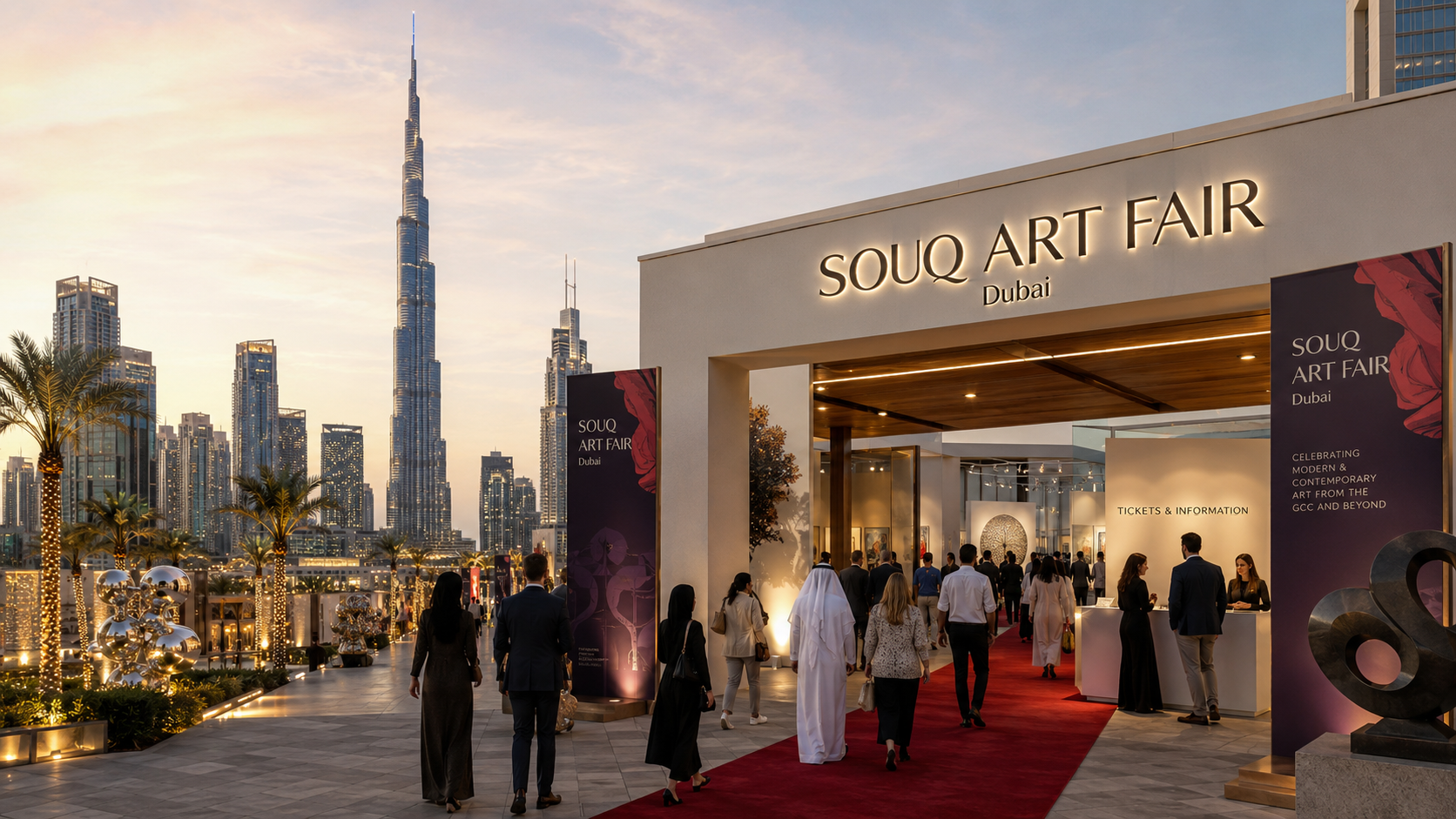
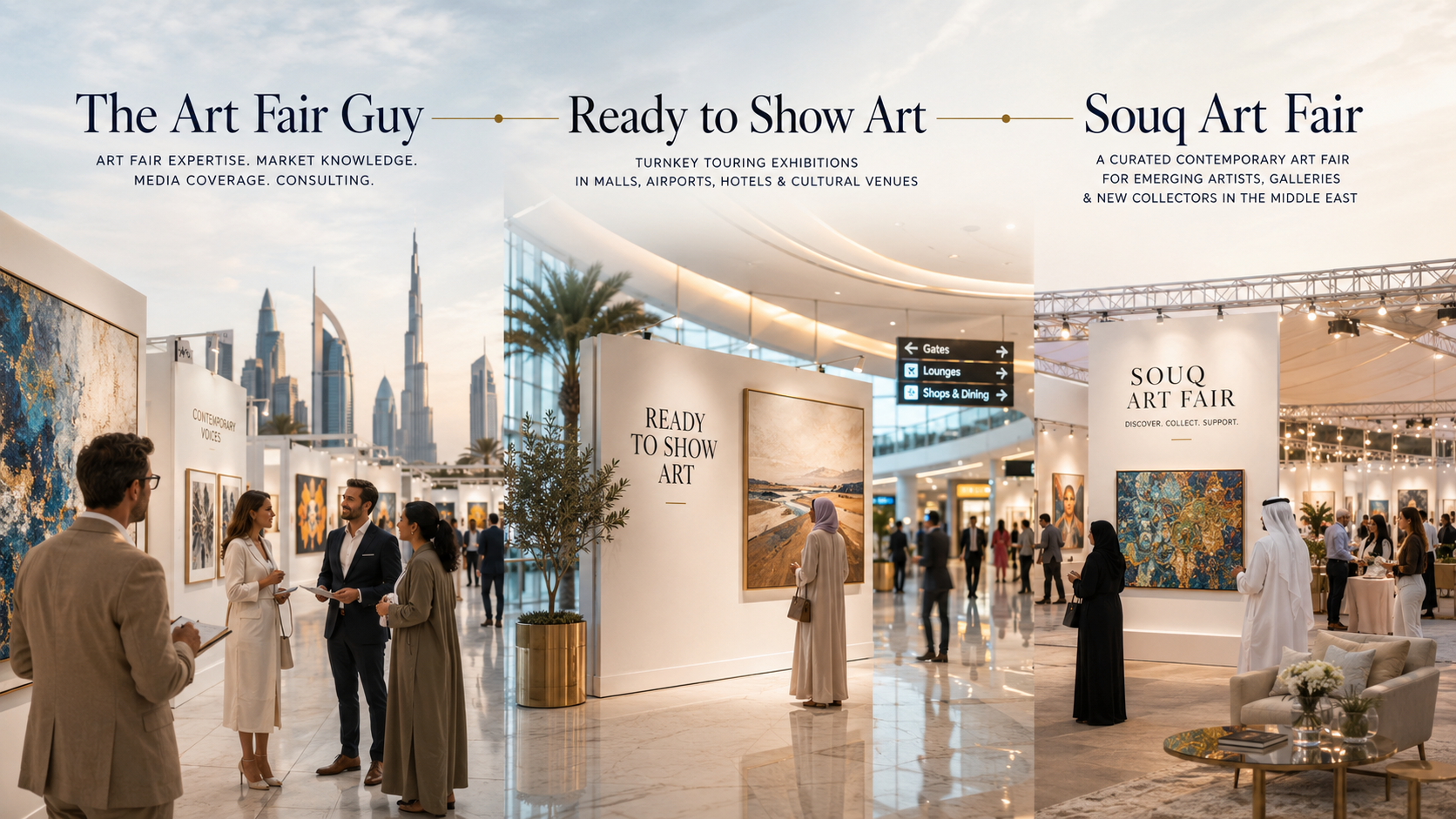
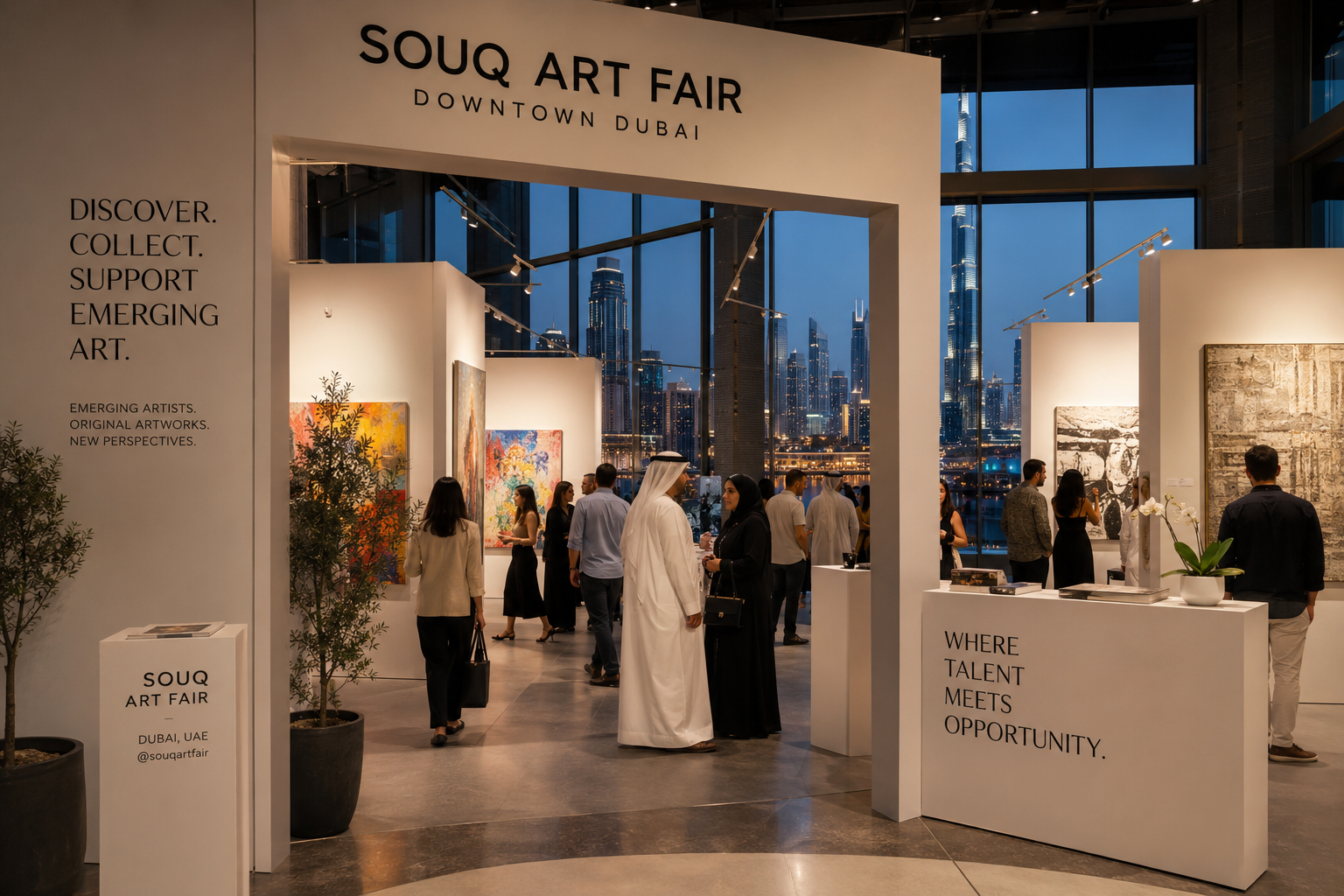
Souq Art Fair is another developing option. Its first UAE edition is planned for Q1 2027 and applications are open to solo artists and galleries. The fair’s published model focuses on curated selection, original artworks, transparent prices and uncluttered presentations.
Before participating in any fair, calculate the complete cost:
- Participation fee
- Transport
- Framing
- Packaging
- Installation
- Insurance
- Travel and accommodation
- Payment fees
- Commission
- Marketing materials
- Staff or assistant costs
Then calculate how many artworks you would need to sell to recover the investment.
Step 15: Curate Your Exhibition Space for Sales
Do not hang every artwork you own.
A crowded wall makes it difficult for visitors to focus and can reduce the perceived value of individual works.
Select a coherent group of artworks with:
- One strong focal work
- Several accessible entry-level pieces
- A range of sizes
- Clear prices
- Consistent labels
- Enough empty space
- A logical visual flow
Keep additional works in storage and show them when a visitor expresses a specific preference.
Every displayed artwork should have a label containing:
- Artist name
- Title
- Year
- Medium
- Dimensions
- Edition number
- Price
Bring certificates of authenticity, packaging materials, payment options and a delivery plan.
A buyer should be able to complete the purchase without waiting several days for basic information.
Step 16: Learn How to Speak to Potential Buyers
Do not sit behind a table looking at your phone.
Stand where visitors can enter without feeling blocked. Greet them warmly, then allow them time to look.
A simple opening question is enough:
Is there a particular work that caught your attention?
When someone stops in front of an artwork, explain its story in two or three sentences. Do not begin with a ten-minute lecture.
You can say:
This work is part of a series about the changing relationship between Dubai’s natural landscape and its rapid urban development. I built the surface in several layers to create the contrast between permanence and constant change.
Then ask:
What was it that drew you to this piece?
The buyer’s answer tells you what matters to them.
If they ask for the price, answer confidently. Do not apologise for it.
If the buyer hesitates, clarify practical questions:
- Is the artwork framed?
- Can it be delivered?
- Is installation included?
- Is a payment plan possible?
- Can they reserve it temporarily?
- Is there a smaller work from the same series?
Do not create artificial pressure. Trust is more valuable than forcing a quick decision.
Step 17: Make Payment Easy
Prepare professional payment options before the exhibition.
Depending on your business setup and local regulations, this may include:
- Bank transfer
- Card payment
- Secure payment link
- Digital invoice
- Deposit followed by final payment
- Approved instalment arrangement
Provide a written invoice or sales confirmation containing:
- Your legal name or registered business name
- Buyer details
- Artwork details
- Total price
- Tax information, when applicable
- Payment terms
- Delivery terms
- Ownership transfer
- Signature or digital confirmation
Commercial, licensing and tax requirements differ between the UAE, Qatar and Saudi Arabia. Confirm which rules apply to your residency status, business structure and sales activity before accepting regular commercial payments.
Step 18: Follow Up After Every Serious Conversation
Many art sales happen after the event rather than during it.
Record the following information after a conversation:
- Person’s name
- Contact details
- Artwork they liked
- Preferred size or colour
- Budget indication
- Where they plan to install the work
- Next agreed action
Send a personalised follow-up within 24 to 48 hours.
Example:
It was a pleasure meeting you at the exhibition yesterday. As promised, I have attached the details of Desert Memory III, including dimensions, price and an image of the work. Delivery within Dubai can be arranged. Please let me know if you would like me to reserve it until Thursday.
Do not send a generic catalogue containing unrelated works when somebody has already told you which artwork they like.
City Guide: Making Your First Sale in Dubai
Dubai offers one of the GCC’s most commercially active environments for emerging artists.
Focus on:
- Artist-accessible art fairs
- Gallery districts and openings
- Interior design and architecture networks
- Hospitality and restaurant projects
- Corporate offices
- Real estate staging and show apartments
- Private studio visits
- Community exhibitions
- Brand collaborations
World Art Dubai provides direct participation opportunities for solo artists, while Souq Art Fair is developing a curated platform specifically aimed at emerging artists and future-focused galleries.
Dubai artists should also build relationships beyond the traditional art world. Designers, hotel groups, property developers and corporate clients can become important buyers and commissioners.
City Guide: Making Your First Sale in Abu Dhabi
Abu Dhabi’s art ecosystem is strongly connected to institutions, education, cultural programmes and long-term development.
421 Arts Campus describes itself as an independent platform dedicated to emerging artists and creative practitioners in the UAE and wider region. It offers exhibitions, workshops, talks, development programmes and residencies.
The Beyond Emerging Artists programme has provided UAE-based emerging artists with mentorship, commissions and exhibition opportunities. Abu Dhabi Art transitioned into Frieze Abu Dhabi for 2026, with the inaugural Frieze edition scheduled at Manarat Al Saadiyat from 20 to 22 November 2026.
Artists based in Abu Dhabi should prioritise:
- Institutional open calls
- Residencies
- Mentorship programmes
- Cultural Foundation and Manarat Al Saadiyat events
- 421 programmes
- Museum and university networks
- Curatorial relationships
- Collector events surrounding major fairs
The path to a sale may begin through professional development and institutional visibility rather than immediate retail activity.
City Guide: Making Your First Sale in Doha
Doha’s art community is smaller than Dubai’s, which can make relationships especially important.
The Fire Station’s Artist in Residence programme is a nine-month programme for artists living and working in Qatar. It provides studio space and opportunities to develop artistic practice. The institution also operates residency and exchange programmes for artists and curators at different career levels.
Doha-based artists should focus on:
- Qatar Museums programmes
- Fire Station residencies and events
- Open studios
- Cultural talks
- University communities
- Design and architecture networks
- Diplomatic and international communities
- Hotel and corporate commissions
- Private collector introductions
In a concentrated market, reliability and repeated personal presence matter. Attend events regularly rather than appearing only when you want to promote an exhibition.
Country Guide: Making Your First Sale in Saudi Arabia
Saudi Arabia’s art sector is developing rapidly, with opportunities emerging in Riyadh, Jeddah, AlUla, Khobar and other cities.
Misk Art Institute operates educational programmes, grants, residencies and exhibitions for artists. Its 2026 Art & Design Market was presented as a platform where creatives could discover, sell, source and commission one-off works, with selected participants offered free booths.
Hayy Jameel in Jeddah is a dedicated arts complex and creative hub that brings together exhibitions, education, cinema, design and community programmes.
Saudi-based artists should develop networks across:
- Misk Art Institute
- Hayy Jameel
- Galleries in Riyadh and Jeddah
- Cultural foundations
- Design and architecture studios
- Hospitality projects
- Government-supported open calls
- Corporate and private commissions
- Art and design markets
- Public art opportunities
Saudi artists should maintain professional materials in both Arabic and English whenever possible. This makes the work accessible to local decision-makers and international curators.
A 90-Day Plan to Make Your First Art Sale
Days 1 to 30: Become Sales-Ready
- Select one coherent collection.
- Photograph every available artwork.
- Create an inventory.
- Establish consistent prices.
- Write your biography and artist statement.
- Prepare certificates of authenticity.
- Build or improve your website.
- Optimise Instagram and LinkedIn.
- Create a professional email address.
- Prepare a portfolio PDF.
Days 31 to 60: Build Visibility
- Publish consistently on Instagram.
- Share professional updates on LinkedIn.
- Attend at least four art or design events.
- Contact ten relevant people personally.
- Invite selected contacts to a studio visit.
- Apply to suitable open calls.
- Research upcoming fairs and exhibitions.
- Join relevant local creative communities.
- Start a small email list.
Days 61 to 90: Ask for the Sale
- Organise a private studio viewing or small presentation.
- Show clearly priced available works.
- Follow up with previous contacts.
- Approach selected designers or corporate buyers.
- Apply for one carefully evaluated exhibition or fair.
- Offer commissions only when the request fits your practice.
- Make payment and delivery simple.
- Ask existing supporters for introductions.
- Track every enquiry.
- Review which activities created genuine buyer interest.
Common Mistakes Emerging Artists Should Avoid
Waiting to Be Discovered
Galleries and collectors cannot find work they never see.
Posting Without Contact Information
Every profile should explain who you are, where you are based and how to reach you.
Hiding Every Price
Price secrecy can discourage first-time buyers.
Changing Prices for Different People
Inconsistent pricing damages trust.
Exhibiting Everywhere
Choose platforms based on quality, audience and commercial relevance.
Overcrowding Displays
Fewer well-presented works usually create a stronger impression.
Talking Only About Yourself
Successful networking requires genuine interest in other people.
Sending Unrequested Large Files
Send a website link first. Provide a portfolio when requested.
Ignoring Follow-Up
A good conversation is not a sales process until you continue it.
Discounting Too Quickly
Instead of immediately reducing the price, consider delivery, framing, reservation or a structured payment arrangement.
Frequently Asked Questions
Do I need a gallery to sell my first artwork in the GCC?
No. Many artists make their first sales through personal contacts, studio visits, art fairs, community exhibitions, designers or social media. Gallery representation can become important later, but it is not required for your first sale.
Is Instagram enough to sell art in Dubai or Doha?
Instagram is useful for discovery, but it should be supported by a website, professional contact information, clear artwork details and a reliable payment and delivery process.
Should emerging artists display prices online?
Visible prices can make buying easier, especially for first-time collectors. When prices are not public, provide a clear and fast enquiry process.
How many artworks do I need before approaching buyers?
A coherent collection of approximately 10 to 20 finished works is usually enough to begin presenting yourself professionally.
Should I sell inexpensive prints to attract buyers?
Prints can create an accessible entry point, but they should be produced professionally, clearly described and issued in controlled editions. Do not present mass reproductions as original artworks.
How can I find collectors in Saudi Arabia or the UAE?
Attend art events, build relationships with galleries and cultural institutions, connect with designers and architects, participate in curated sales platforms and ask existing contacts for introductions.
How important is networking in the GCC art market?
It is extremely important. Buyers often purchase after they understand the artist, trust the seller and encounter the work more than once. Consistent personal presence is more effective than aggressive self-promotion.
Your First Sale Is the Beginning
Your first art sale is important, but not only because of the money.
It proves that somebody outside your immediate circle sees value in your work. It also teaches you how buyers behave, which questions they ask and what information they need before making a decision.
The goal is not to sell one artwork and start again from zero.
The goal is to turn the first buyer into a long-term supporter, the first exhibition into a stronger portfolio and the first sale into the foundation of a sustainable artistic career.
The GCC needs more artists who approach their practice professionally, communicate clearly and make collecting original art accessible.
Build strong work. Present it properly. Show up consistently. Develop real relationships. Make buying easy.
That is how the first sale happens.
The Art Fair Guy
Are you an emerging artist looking for a professionally curated sales platform in the GCC?
Souq Art Fair is accepting expressions of interest from solo artists and galleries for its first UAE edition, planned for 2027. Selected exhibitors will present original artworks in a curated environment designed to connect emerging talent with serious new collectors.