
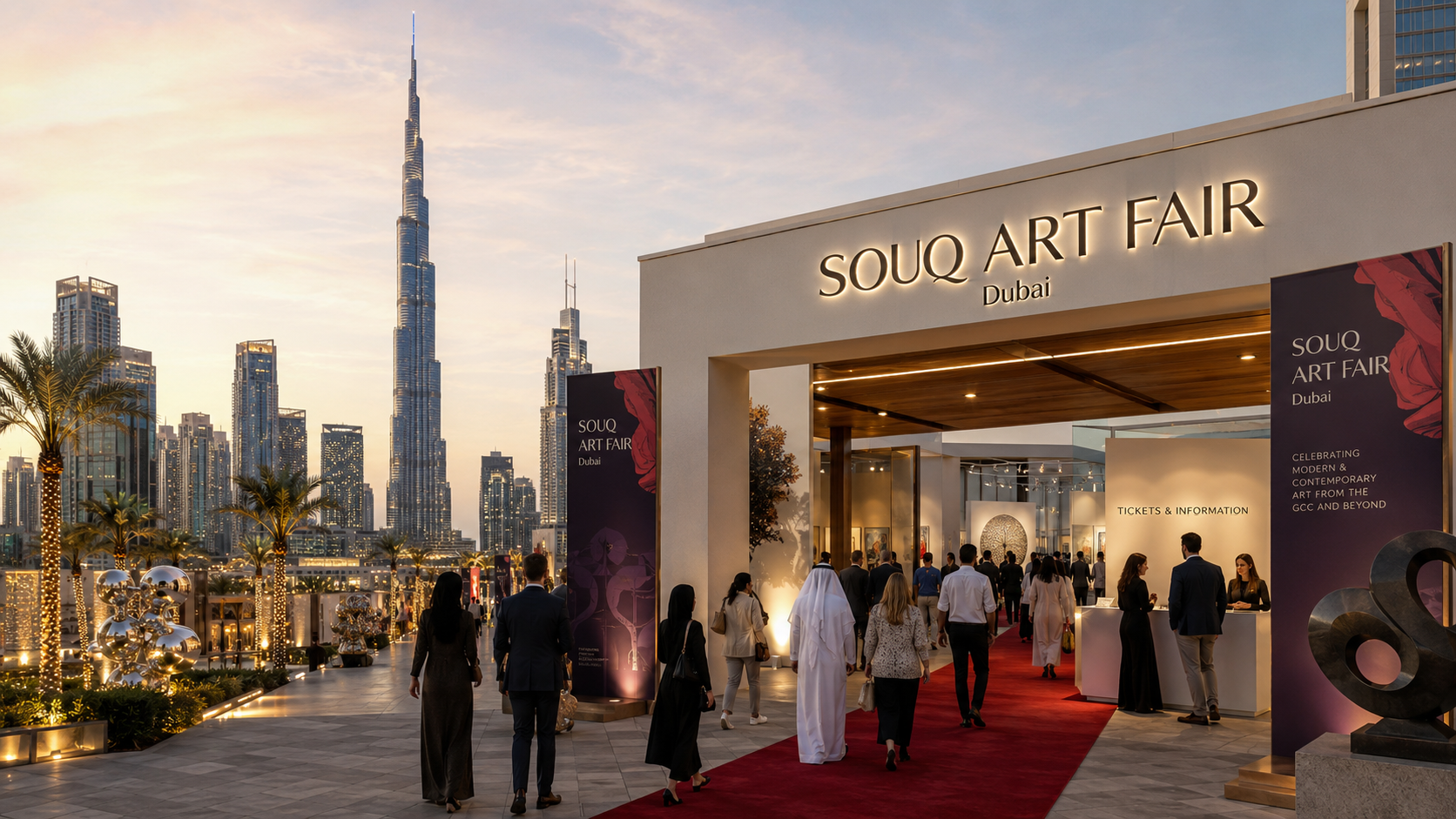
The Future of Art Fairs in the GCC: Why Emerging Artists Need Better Sales Platforms
The Gulf Cooperation Council is investing heavily in museums, cultural districts, biennials, public art programmes and international creative events. From Dubai and Abu Dhabi to Doha, Riyadh, Jeddah and AlUla, culture has become an increasingly visible part of the region’s economic and urban development.
Yet one essential part of the art ecosystem remains underdeveloped: the commercial infrastructure that enables emerging artists to find buyers and build sustainable careers.
The GCC does not suffer from a lack of artistic talent. It suffers from a lack of consistent, accessible and professionally curated routes between artists and collectors.
For many emerging artists, particularly those without permanent gallery representation, art fairs and art festivals are not simply promotional opportunities. They are among the few occasions when artists can meet a meaningful concentration of collectors, interior designers, art consultants, corporate purchasers, hospitality groups and private buyers in one place.
This is why the future of art fairs in the GCC matters far beyond the events themselves. These platforms will help determine whether the region develops a sustainable primary art market or remains dependent on a limited number of institutions, international galleries and occasional major events.
A Fast-Growing Cultural Region With a Commercial Gap
The arrival of major international brands demonstrates how important the Gulf has become to the global art industry.
Art Basel Qatar launched in Doha in February 2026 with 87 galleries presenting 84 artist-focused projects. More than half of the artists represented came from the Middle East, North Africa and South Asia. Frieze Abu Dhabi is also scheduled to launch in November 2026, building on the foundations of Abu Dhabi Art and connecting the emirate’s cultural infrastructure with Frieze’s international gallery and collector network.
These developments are significant. They bring international visibility, experienced collectors, global galleries and professional market standards into the GCC.
However, prestigious international fairs cannot solve the entire problem.
Most large art fairs remain gallery-led and highly selective. Participation costs, gallery requirements, logistics and curatorial expectations can place them beyond the reach of many independent artists and younger galleries. Their primary role is to serve an established professional market, not necessarily to provide a first commercial platform for every promising emerging artist.
The GCC therefore needs several levels of art-market infrastructure. It needs globally recognised fairs, strong regional galleries, accessible retail fairs, artist-led initiatives, curated festivals and year-round discovery platforms.
Without this wider structure, a growing number of talented artists will continue producing work without gaining reliable access to buyers.
Why Art Fairs Remain Essential
The global market data shows that physical art fairs remain commercially important.
In 2025, art-fair sales increased to 35 percent of dealer turnover, their highest share since 2022. At the same time, online-only sales fell to 15 percent of total art-market sales, their lowest level since 2019. Online channels remain valuable for discovery and lower-priced transactions, but the market has clearly not replaced physical encounters with digital marketplaces.
This distinction is particularly important in the GCC.
Art buyers frequently want to see an artwork in person, understand its scale and material, hear the artist’s story and develop confidence in the seller. This is even more important for first-time collectors who may not yet understand editions, certificates of authenticity, provenance, pricing or installation requirements.
Instagram can create visibility, but visibility is not the same as a functioning sales system.
A social media profile does not automatically provide professional curation, buyer confidence, transparent pricing, secure payment processes, delivery support or access to serious collectors. Large online marketplaces may list thousands of artworks, but that volume can make discovery difficult and quality inconsistent.
A well-organised physical fair reduces this uncertainty. It brings selected artists into a trusted environment and gives buyers the opportunity to compare work, ask questions and make decisions.
For many emerging artists in the GCC, a fair is therefore not one sales channel among many. It may be the only time during the year when their work is professionally presented to a concentrated audience of potential buyers.
The Emerging Artist Problem
The career path for an emerging artist in the GCC remains fragmented.
An artist may build an audience on Instagram, participate in group exhibitions, join an open call or display work at a cultural festival. However, these activities do not necessarily produce sales, representation or repeat collectors.
Traditional gallery representation remains valuable, but galleries have limited capacity. They must carefully select artists whose work fits their programme and whose careers they can support over several years. Even as the gallery landscape expands, it cannot represent every talented artist entering the market.
At the opposite end of the spectrum, open-entry events may provide wall space without providing sufficient curation, collector targeting or sales support. When an event accepts too much work, displays it without clear standards and focuses primarily on selling stands, both artists and collectors can lose confidence.
The answer is not simply to organise more fairs.
The GCC needs better-designed fairs.
What the Next Generation of GCC Art Fairs Must Deliver
Future art fairs for emerging artists should be built around several practical principles.
1. Strong Curation
Visitors need to trust that the work has been selected rather than merely accepted because the exhibitor could pay for space.
Curation does not mean restricting creativity. It means establishing a clear standard for artistic quality, originality, presentation and professional readiness.
2. Accessible Participation
Emerging artists and younger galleries need booth sizes, participation formats and pricing structures that reflect their financial reality.
Shared presentations, smaller curated booths, sponsored sections and subsidised participation can reduce barriers without reducing quality.
3. Transparent Artwork Pricing
New collectors are often discouraged by hidden prices and unclear sales processes.
Every artwork should clearly show the artist, title, year, medium, dimensions, edition information and price. Transparent pricing makes the market more approachable and gives first-time buyers greater confidence.
4. Collector Education
The GCC has considerable potential to develop a new generation of collectors, but collectors are not created simply by placing artworks in a room.
Guided tours, introductory talks, artist conversations and simple collecting guides can explain what buyers should look for, how editions work, why authenticity matters and how to begin building a collection.
5. A Clear Focus on Sales
Art fairs can offer talks, performances, food, entertainment and cultural programming, but their commercial purpose should not become secondary.
Artists need qualified buyers, follow-up opportunities, professional sales support and practical delivery solutions. Attendance numbers mean little when exhibitors leave without sales or useful contacts.
6. Year-Round Visibility
A four-day event should be the centre of a longer relationship, not an isolated moment.
Artist profiles, digital previews, collector introductions, awards, residencies, corporate acquisition programmes and post-fair communication can turn a temporary event into a year-round talent platform.
Existing Platforms Show the Scale of Demand
World Art Dubai illustrates the demand for accessible art fairs in the region. Its 2026 edition promotes more than 400 local and international exhibitors, including over 275 solo artists and more than 120 galleries, with artwork prices ranging from approximately USD 100 to USD 20,000.
Art Dubai serves a different segment, bringing together leading and emerging galleries from the Middle East and international markets. The fair also manages an initiative through which Dubai-based galleries can apply for support of up to AED 50,000 for participation in international art fairs. This type of funding recognises an important reality: participation, mobility and international visibility are expensive, particularly for smaller galleries.
Frieze Abu Dhabi has similarly announced bursaries of up to 30 percent for younger galleries and a dedicated section for early to mid-career artists connected to the UAE and West Asia.
These initiatives are positive, but the market still needs platforms specifically designed around emerging artists, accessible collecting and disciplined commercial curation.
Souq Art Fair as a New Model for the GCC
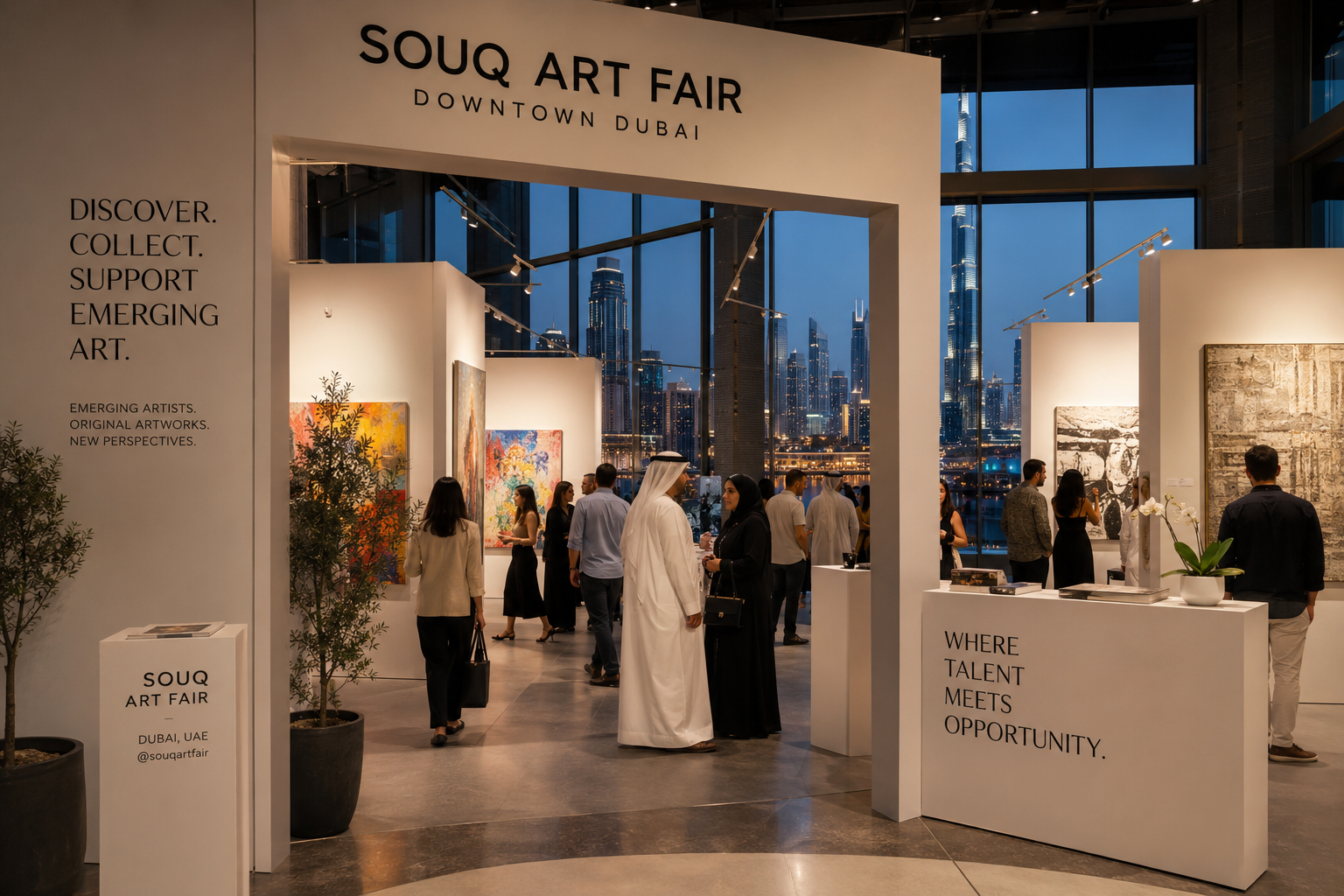
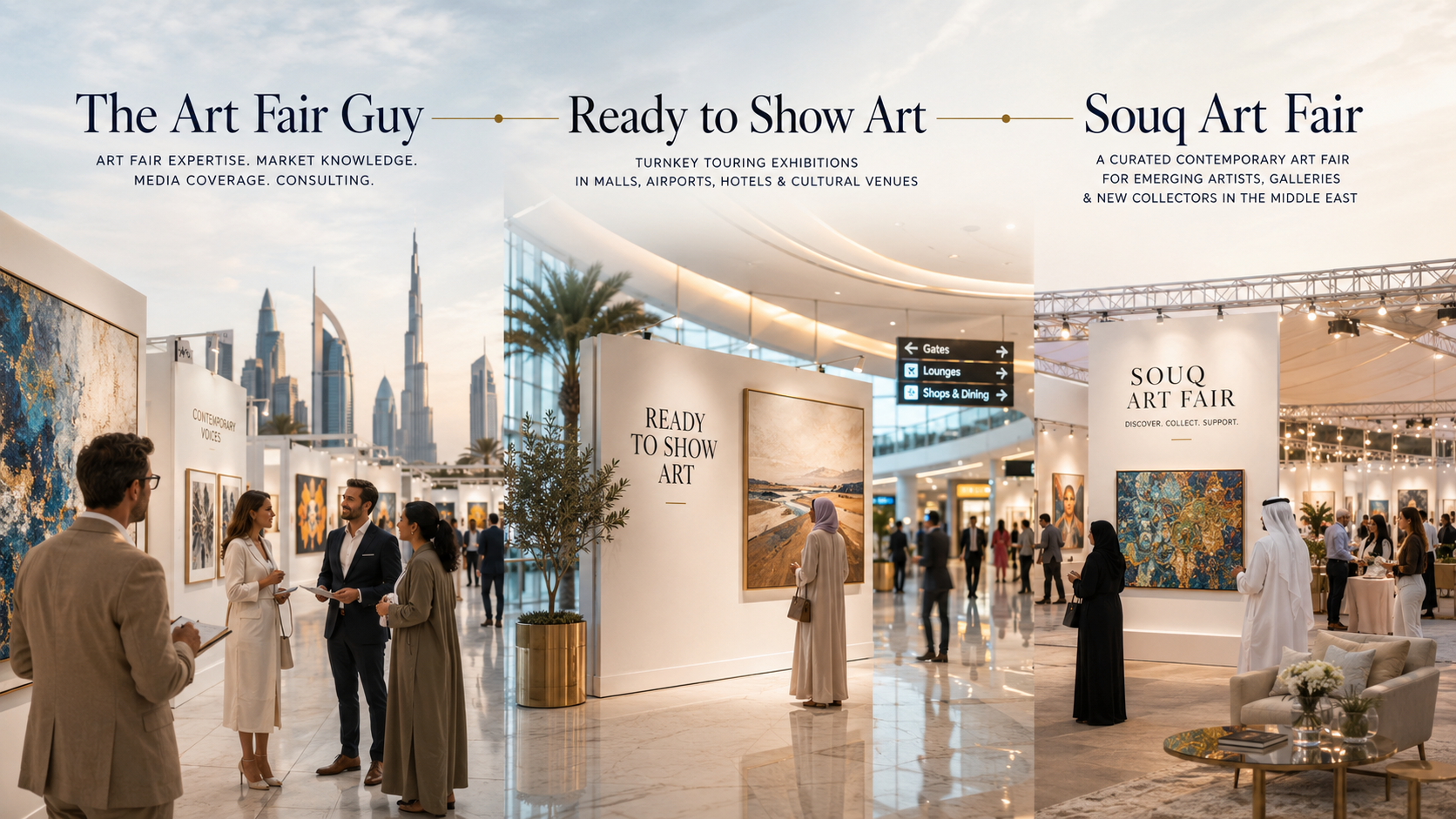
Souq Art Fair has been created to address this missing part of the market.
Launching in the United Arab Emirates in the first quarter of 2027, the fair is positioned as a curated, sales-focused platform for ambitious emerging artists and future-focused galleries. Applications are open to both solo artists and galleries, but participation is not based on open entry. Every applicant is reviewed for quality, coherence and suitability.
This is a crucial distinction.
Souq Art Fair is not intended to be another high-volume event where organisers simply rent walls to as many exhibitors as possible. Its model is based on controlled selection, transparent commercial standards and a calm, premium presentation.
The fair’s published standards require original artworks or controlled limited editions, clear artwork labels, certificates of authenticity for editions and photography, and a price ceiling of USD 10,000. Exhibitors must submit their artwork selection, pricing and booth concept in advance. Overcrowded presentations, mass reproductions and open editions are not permitted.
These rules protect both sides of the transaction.
Artists benefit from being presented in a credible environment where their work is not lost among cluttered or inconsistent displays. Collectors benefit from clear information, controlled editions, visible prices and quality assurance.
Souq Art Fair also plans to provide guided collector tours, collecting education, artist talks, sales and booth-strategy support, PR opportunities and a year-round emerging-artist pipeline.
This combination makes it a viable response to the GCC’s current market gap.
It sits between two existing models: the international gallery fair, which can be inaccessible to independent emerging artists, and the open marketplace, which can lack sufficient curation and collector confidence.
Souq Art Fair aims to provide accessibility without sacrificing standards.
As a new platform, it will still need to prove its ability to attract qualified collectors, deliver strong sales and build long-term regional credibility. However, its structure directly addresses many of the weaknesses currently limiting the emerging art market in the GCC.
Building Buyers, Not Just Events
The long-term success of the GCC art market will not be measured only by the number of new museums or international fairs opening in the region.
It will also be measured by how many local residents begin buying original art, how many companies establish acquisition programmes, how many hotels and property developers commission regional artists, and how many emerging artists can build financially sustainable careers.
The next phase of growth must therefore focus on buyer development.
Art fairs can play a central role by making collecting less intimidating, presenting accessible price points and creating direct relationships between artists and buyers. A visitor who purchases one carefully selected artwork for the first time can become a repeat collector, patron or corporate buyer.
This is why professional curation and commercial accessibility must work together.
A fair without accessibility excludes the next generation of collectors. A fair without curation damages trust. A fair without a serious sales strategy fails the artists it claims to support.
The Future Is a Connected Regional Art Market
The GCC does not need one dominant event to solve every market challenge. It needs a connected ecosystem of complementary platforms.
International fairs can bring global visibility and experienced collectors. Regional fairs can develop local buying communities. Emerging-artist platforms can identify new talent. Galleries can provide long-term career development. Digital tools can extend discovery throughout the year. Governments, brands and cultural institutions can reduce participation barriers through grants, commissions and acquisition programmes.
The region also has the potential to create a genuine GCC art-fair circuit, allowing artists and galleries to reach buyers across the UAE, Saudi Arabia, Qatar, Bahrain, Kuwait and Oman rather than depending on a single annual event.
For this to work, future platforms must place artists and buyers at the centre of their model.
Souq Art Fair represents one possible blueprint: curated rather than open-entry, accessible rather than intimidating, transparent rather than opaque, and built around sales rather than stand rental alone.
The opportunity is clear. The GCC has the talent, investment, international population and cultural ambition required to become one of the world’s most dynamic art regions.
The next challenge is to build the platforms that allow its artists to be discovered, purchased and supported.
Artists and galleries interested in the first edition of Souq Art Fair can now submit an expression of interest, while collectors and partners can register for launch updates ahead of the fair’s planned UAE debut in Q1 2027.