
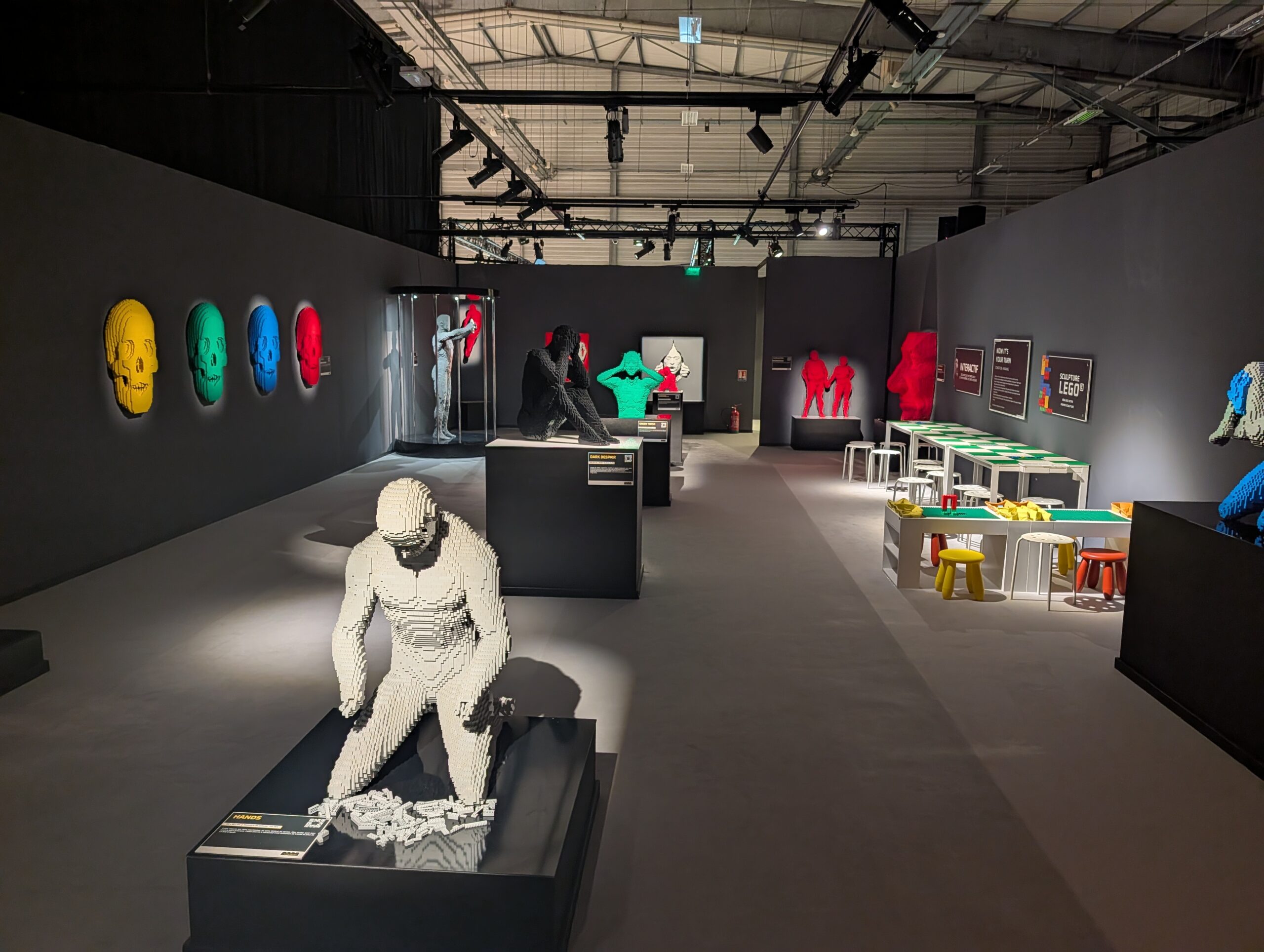
I recently visited The Art of the Brick in Nantes, France, and filmed a full walkthrough of the exhibition. Walking through the show, one thing becomes clear very quickly: this is not simply a LEGO® display. It is a carefully built touring exhibition concept that sits somewhere between contemporary sculpture, popular culture, family entertainment, and blockbuster exhibition design.
The exhibition is presented at the Parc des Expositions de la Beaujoire in Nantes and features more than 90 works created from over one million LEGO® bricks by American artist Nathan Sawaya. The Nantes edition includes original sculptures, reimagined versions of famous artworks, a large-scale T-Rex, multimedia elements, and interactive areas where visitors can build their own creations.
A Blockbuster Exhibition Built Brick by Brick
What makes The Art of the Brick especially interesting from an art fair and exhibition perspective is its strong touring format. This is not a classical museum show that exists in one location only. It is a scalable, internationally known travelling exhibition that can be installed in different cities, venues, and cultural contexts.
The official Nathan Sawaya website describes Art of the Brick as a collection of multiple touring exhibitions featuring artworks made with LEGO® bricks. The concept premiered in 2007 and has since developed into an international exhibition phenomenon. Today, the exhibition continues to travel across major cities, with current and recent stops including Nantes, Brussels, Copenhagen, Toronto, and other locations.
This touring model is one of the reasons why the exhibition has become so successful. It combines a universally recognizable material with a clear artistic authorship and an accessible visitor experience. LEGO® bricks are familiar to almost everyone, but Nathan Sawaya uses them in a way that transforms them into monumental sculptures, emotional human figures, and reinterpretations of art history.
For visitors, this creates a very direct entry point. You do not need specialist art knowledge to understand the material, but the longer you look, the more you recognize the complexity behind the works. That balance between accessibility and artistic ambition is one of the strongest elements of the exhibition.
Nathan Sawaya: From Lawyer to Brick Artist
The artist behind The Art of the Brick is Nathan Sawaya, an American contemporary artist known for using LEGO® bricks as his primary artistic medium. Before becoming a full-time artist, Sawaya worked as a lawyer. His biography describes him as the first contemporary artist to bring LEGO® into the art world as a medium, transforming a toy associated with childhood into a serious sculptural language.
Sawaya’s work is often playful at first glance, but it is also extremely disciplined. Each sculpture requires planning, patience, engineering, and a strong understanding of form, color, and scale. His figures often deal with human emotions, identity, imagination, and transformation. One of his most famous works, Yellow, shows a human figure opening its chest, with yellow bricks spilling out from the body. It is simple, striking, and immediately memorable.
That is also what makes Sawaya’s work ideal for a touring exhibition. His sculptures are visually powerful, easy to communicate in marketing, and instantly recognizable in photos and videos. At the same time, they carry enough artistic substance to hold the attention of adults, collectors, families, and design-minded visitors.
Why The Art of the Brick Works So Well as a Touring Exhibition
From the perspective of travelling exhibitions, The Art of the Brick has many ingredients that make a show tourable and commercially attractive.
First, the subject is globally understandable. LEGO® is a visual language that crosses borders, generations, and cultures. A visitor in Nantes, Paris, London, New York, Dubai, or Singapore can immediately connect with the material.
Second, the exhibition has a strong artist story. Nathan Sawaya is not anonymous behind the works. His biography, career change, and artistic mission give the show a central figure and a narrative arc. This is important, because touring exhibitions need more than objects; they need a story that can be communicated in every new city.
Third, the show is highly photogenic. In the current exhibition market, this matters. Visitors want to share what they experience. Sculptures made entirely from LEGO® bricks create strong visual moments, especially when they are life-sized, colorful, or connected to famous artworks such as Van Gogh’s Starry Night, Leonardo da Vinci’s Mona Lisa, or Michelangelo’s David. The official exhibition materials also highlight these reimagined masterpieces as part of the visitor experience.
Fourth, the format works for a broad audience. Families come because of LEGO®. Art lovers come because of the sculptural and conceptual transformation. Tourists come because it is an easy cultural activity. Content creators come because the exhibition is visually strong. That broad appeal is one of the reasons why The Art of the Brick has reached more than 10 million visitors worldwide.
My Visit in Nantes
In Nantes, the exhibition feels like a classic blockbuster touring show: clear visitor flow, instantly understandable rooms, strong visual highlights, and enough variety to keep people moving from one section to the next.
The walkthrough begins with the immediate fascination of the material. You see the bricks, recognize them, and instinctively understand the level of work behind the sculptures. But as the exhibition continues, the focus shifts from the material itself to the artistic ideas behind the works. The best pieces are not impressive only because they are made from LEGO® bricks; they are impressive because Sawaya uses the bricks to create emotion, movement, and metaphor.
The large-scale works are naturally the crowd magnets. The T-Rex, for example, is exactly the kind of piece that anchors a touring exhibition: spectacular, family-friendly, and easy to remember. But the more introspective human figures are just as important. They give the show its emotional depth and prevent it from becoming only a display of technical skill.
What I also appreciated is how the exhibition connects art history with popular material culture. Recreating famous masterpieces in LEGO® bricks could easily become a gimmick. But in this context, it works because the show asks a simple but effective question: what happens when a familiar image is rebuilt with a completely different material?
The answer is that we look again.
The Power of Accessible Art
One of the most important lessons from The Art of the Brick is that accessibility does not have to mean artistic simplification. In many parts of the art world, there is still a divide between “serious” art and popular exhibitions. But touring exhibitions like this show that a wider public can be reached without removing depth, craftsmanship, or authorship.
This is especially relevant for the future of exhibitions. Audiences are changing. Visitors want experiences that are visual, understandable, emotional, and shareable. At the same time, they still want quality. The Art of the Brick succeeds because it understands this balance very well.
It is easy to enter, but not shallow. It is playful, but not childish. It is commercial, but still artist-driven. That combination is rare and valuable.
Final Thoughts
My visit to The Art of the Brick in Nantes confirmed why this exhibition has become one of the most recognizable touring exhibition formats in the world. Nathan Sawaya has created a body of work that turns a familiar everyday material into a serious artistic medium, while still keeping the sense of wonder that makes LEGO® so powerful in the first place.
For anyone interested in art, touring exhibitions, visitor experience, or the future of cultural entertainment, The Art of the Brick is worth studying. It is not only an exhibition about LEGO® bricks. It is an example of how a strong artistic concept can travel internationally, reach millions of visitors, and build a bridge between contemporary art and mass audiences.
I filmed a full walkthrough of the exhibition in Nantes, so you can experience the show room by room and see how Nathan Sawaya’s brick sculptures come together in the exhibition space.
Watch the full walkthrough video here:
#TheArtFairGuy #ArtoftheBrick #NathanSawaya #LEGOArt #Nantes #TouringExhibition #ArtExhibition #ExhibitionReview #ContemporaryArt